

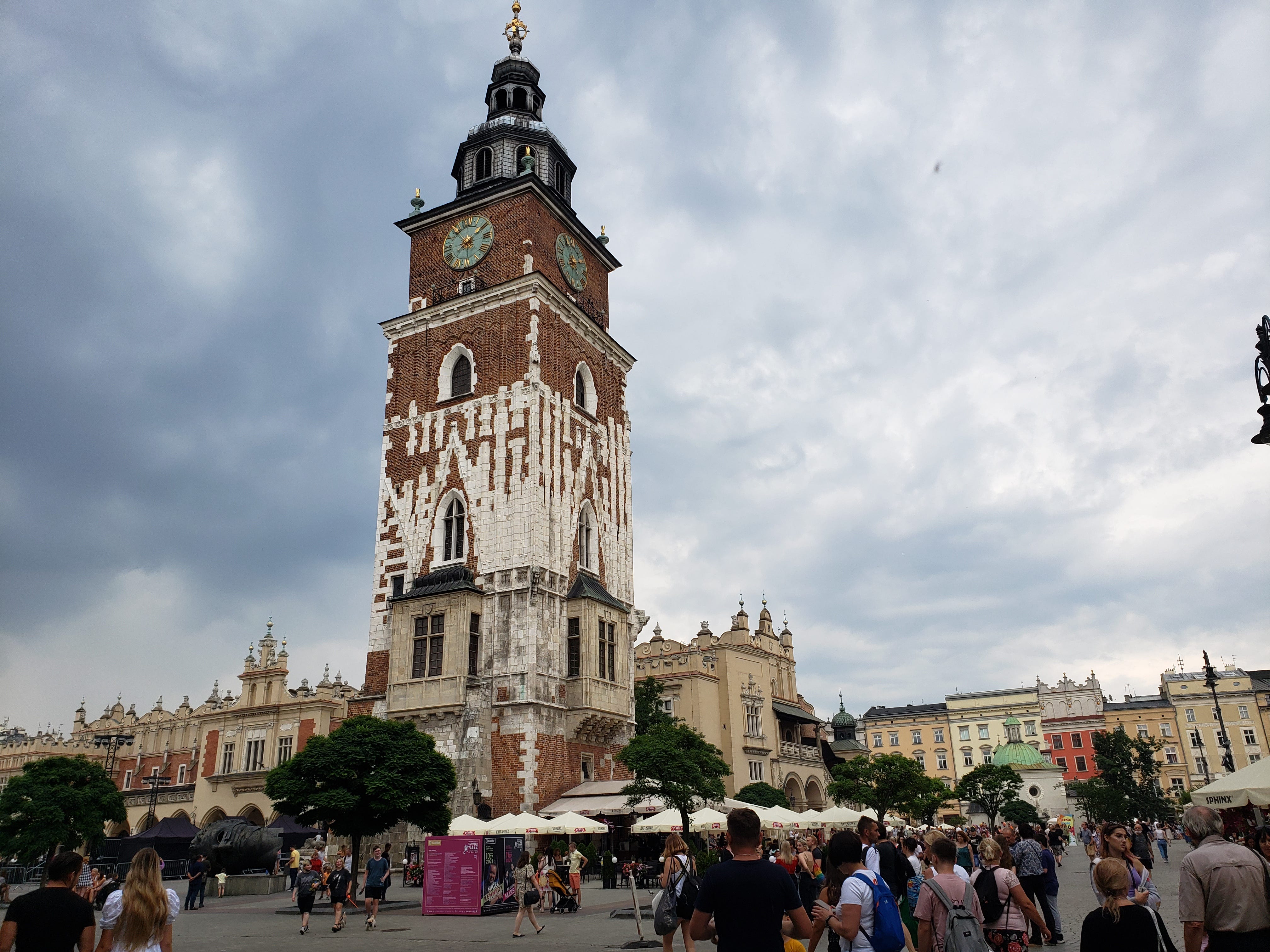
Eastern Europe was not a destination suggested or barely mentioned in my family. Traveling abroad meant going to Italy, France and other Western Countries. And yet, three of my grandparents had been born there, the fourth in Vienna. Granted, growing up through the Cold War undoubtedly played a role in instilling the idea that these countries were off-limits, but as I finally stepped foot on the soil of my ancestors a darker reasoning emerged. These lands held memories and events that were too painful to dwell on. This voyage was a mixture of sadness, wonder, alienation, happiness, connection, and joy. Finding the means to recount it while I balance these experiences and emotions will be my greatest challenge.
Kraków was my first stop and a short flight from Paris where I'd visited friends. I booked an apartment across the Vistula River, about twenty minutes on foot from the old city center. Wandering into a nearby grocery that first evening the language was foreign and communication was largely through hand gestures and smiles, but the dark brown bread, herring, and cheese that I'd enjoyed in my grandparents' home as a child was familiar and comforting.
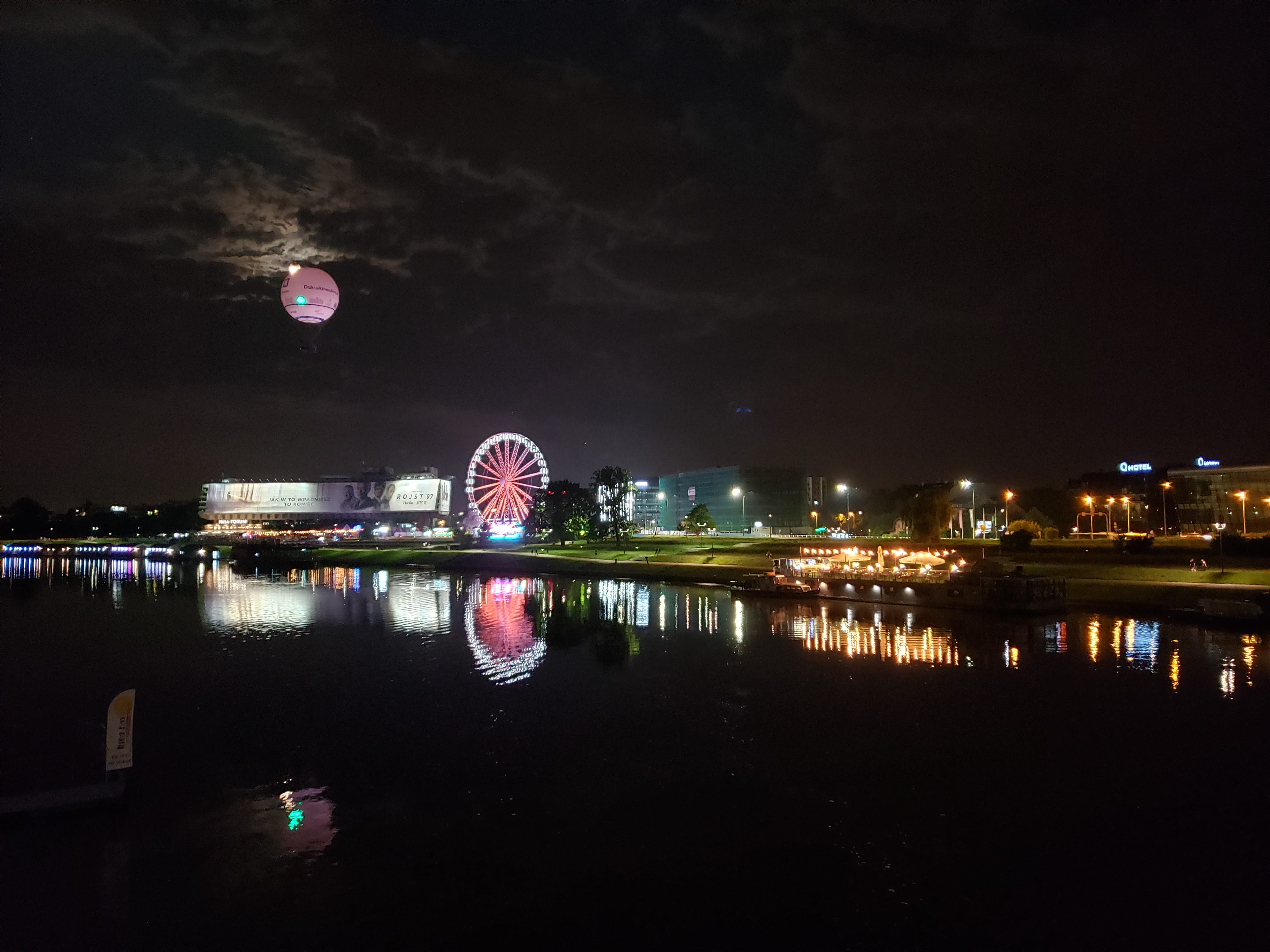
After a full day exploring, admiring architecture, walking on old cobbled stone streets and visiting the Manggha Museum of Japanese Art and Technology (a fascinating place), I wandered into the historic Kazimierz Jewish quarter. In a small greenspace stood a boulder with a plaque. It commemorates the 65,000 Jewish Polish citizens of Kraków and environs murdered during WWII. I was suddenly overcome with emotion and wept.
Nearby was a large gated garden with many tables set up for a dinner. Now composed and curious I spoke to a woman just inside the garden and was invited to join the Jewish Community Centre of Kraków's weekly Shabbot dinner. Jews and non-Jews, young and old gathered amongst the tables. A few were Holocaust survivors. A few had discovered their Jewish roots only recently when aged relatives revealed family secrets from their death beds. A few wore yalmukahs. Others had grown up hearing their grandparents wax nostalgic about the Jewish neighbors they'd had before the war. They’d heard of their food, songs, dances, customs and the void that came afterwards. These conversations piqued a curiosity and drew them to the center to learn more. Others were tourists like me. All were welcome. The atmosphere was joyous and festive.
Conversations flowed easily during the dinner and I was fortunate to form a friendship with a young French man sitting across from me. He’d been living in Kraków with his Polish wife for several years. He offered to show me the town during my stay, mostly by bicycle, and was a delightful guide and companion. The warm, long summer days and cooler nights made it an opportune time to explore the town, parks, museums, cafes, restaurants, biking trails outside the city, and go swimming in an old quarry. The days passed quickly. Kraków was more beautiful and appealing than I’d imagined.
Poland intrigued me and I reserved a car for a month to see more of it. However days before I was scheduled to pick it up, I learned that Poland required a standard driving license and an International driver’s license(IDP). I dutifully ordered the IDP online. With both licenses, passport, and luggage I arrived at the car rental office ready for my roadtrip. But when the young man looked at the International license he said it was not legitimate (I later posted a warning on that provider's website.) He offered me two options: not rent the car or take my chances—there was a risk of fines and the car being confiscated by the Polish police. However, he added, I could try to drive the car up to the Baltic countries where their laws were less stringent. After a lengthy discussion assessing my odds, I decided to rent the car.
I hesitated visiting Auschwitz as my first stop, merely an hour’s drive away, aware of its emotional impact but felt a responsibility to do so.
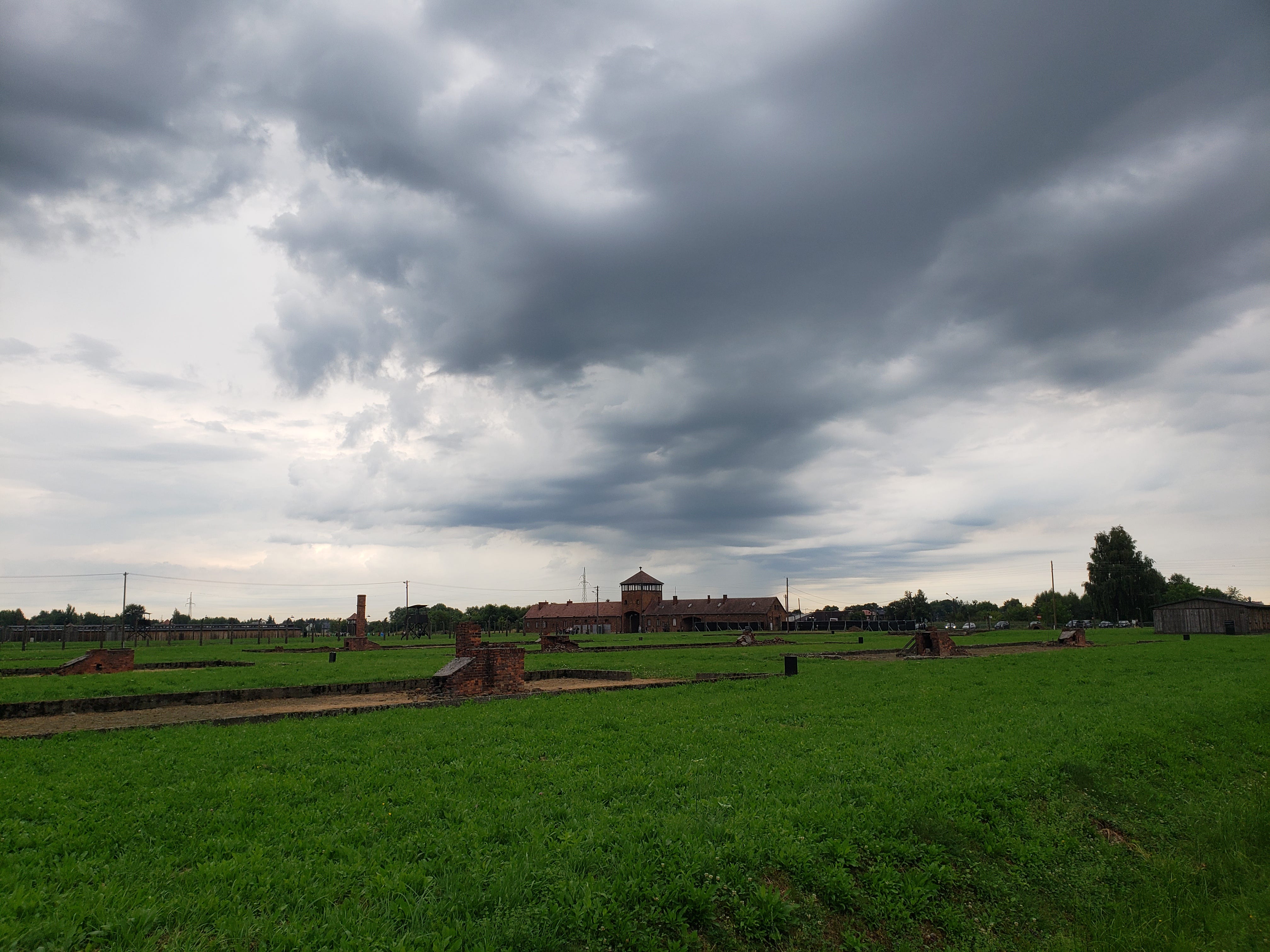
It seemed fitting that I arrived under dark skies and a heavy rain later that afternoon. And chilling to walk the following day less than 15 minutes from my hotel and a vibrant town of homes, shops, and restaurants to the now named Memorial and Museum Auschwitz-Birkenau.
---
After many hours walking amid remanants of unspeakable horror I found some solace. I spied a small bird perched atop a stone filling the air with its song.
It was this image that I chose to leave with.
---
Making my way north to the Lithuanian border I drove towards Łódź(pronounced “Wootch”) a convenient stopover.
Over the years, I’ve categorized certain drivers as cowboys (no offense to you real cowboys who do not resemble this description). They are the ones who drive erratically, usually at excessive speeds. Efforts have been made to curb their enthusiasm.
Aware of the risk I was taking driving without a valid IDP I was not delighted to hear, “There is a speed trap ahead!" from my phone’s GPS—particularly since I hadn’t seen any speed limit signs and trying to assess the legal limit by other drivers is not ideal(see above). Then just around the bend was a police car with two men in bright yellow uniforms standing beside a radar gun. One was holding this huge device and pointing it directly at me. But just then the car directly ahead of mine slowed to a crawl and all the cars behind mine slowly pulled around and began to pass us. I decided, with trepidation, to do the same. No sirens sounded, relieved I continued on.
The subsequent speed trap dance I’d frequently partake in was unnerving, but also comical. In addition to signs and the GPS, large yellow sturdy boxes—clearly designed to deter vandalism—were impossible to miss (police presence was not the usual). Drivers would slow to a crawl, pass them, then immediately speed up again.
With each day I gained my confidence. Once, when I probably was exceeding the speed limit, two policemen were just in the process of setting up their device. I drove on without incident. There is much to be said about luck and timing.
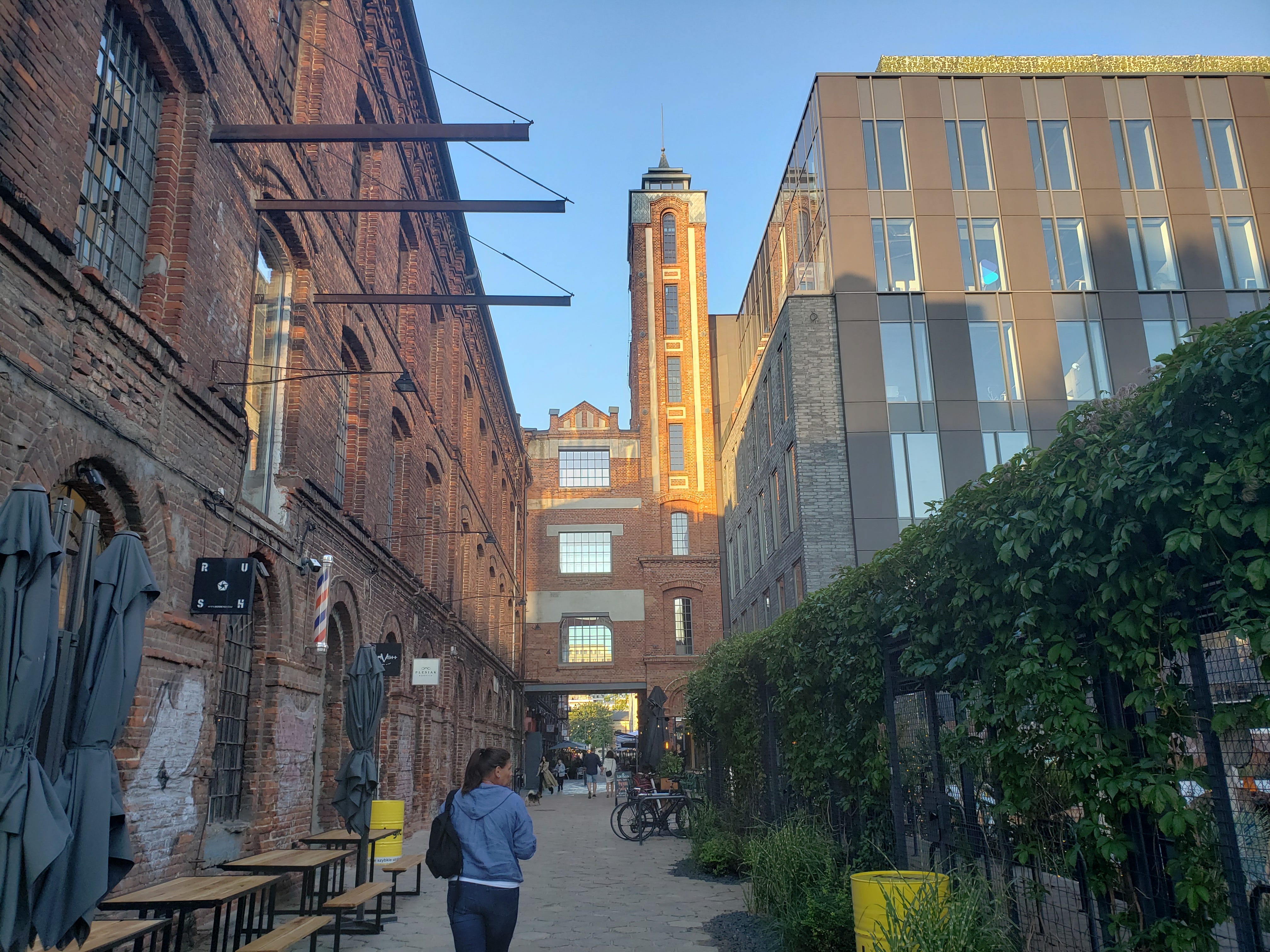
In Łódź I’d found a man online giving private bike tours. Lukasz (pronounced “Wookash”) was around fifty with a bit of a paunch, an easy smile, and a passion for his city. He’d lived in Łódź his entire life and took me to fascinating places—some known, others were well off the beaten path. He spoke of the city's industrial textile boom with pride. And the town’s complicity in the murder and decimation of Poland's Jewish population with heartfelt sadness.
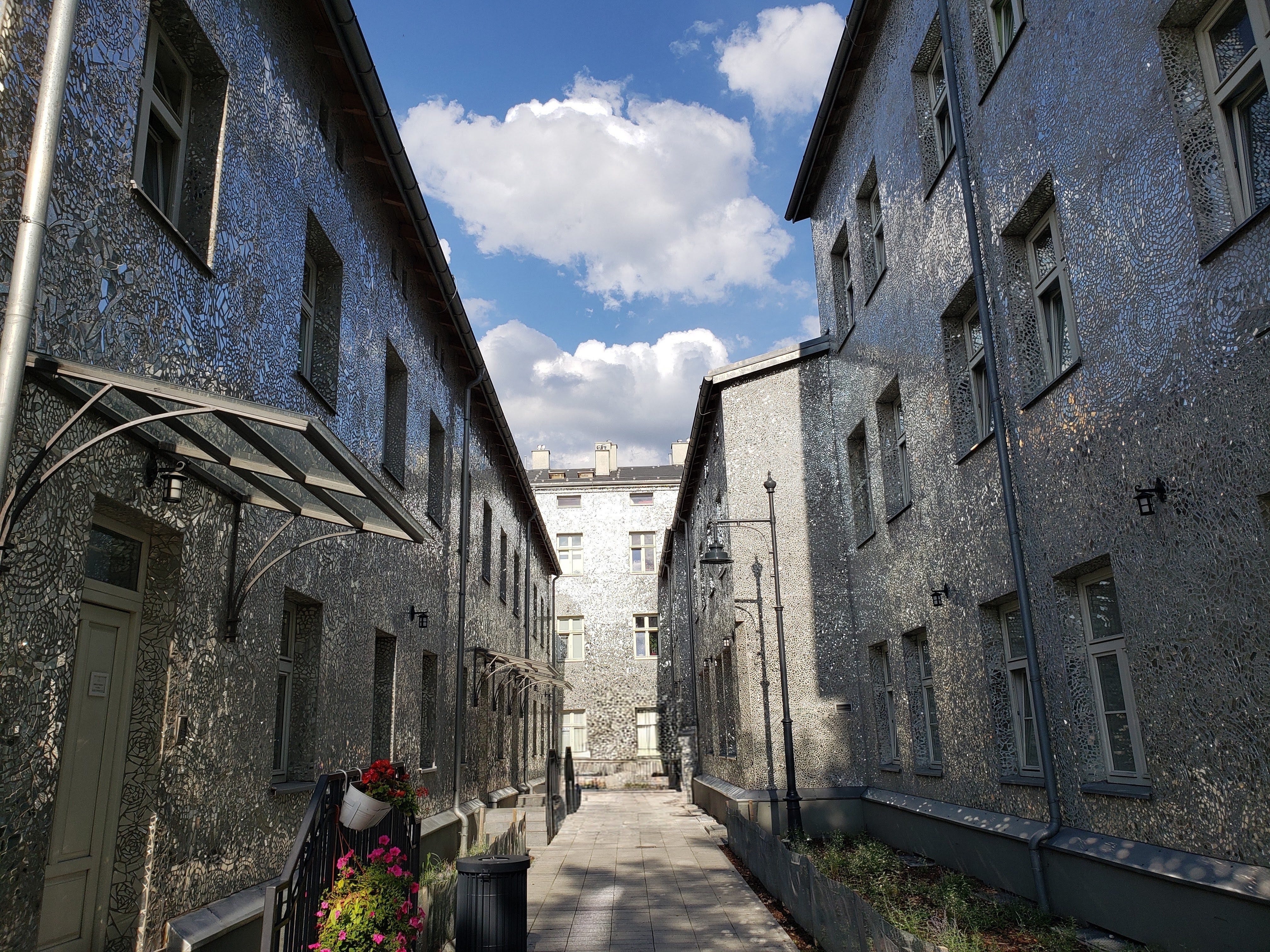
Today Łódź is a vibrant cultural hub.
We ended our time together sitting at a table, sipping beer and eating freshly baked pretzels in a peaceful town square.
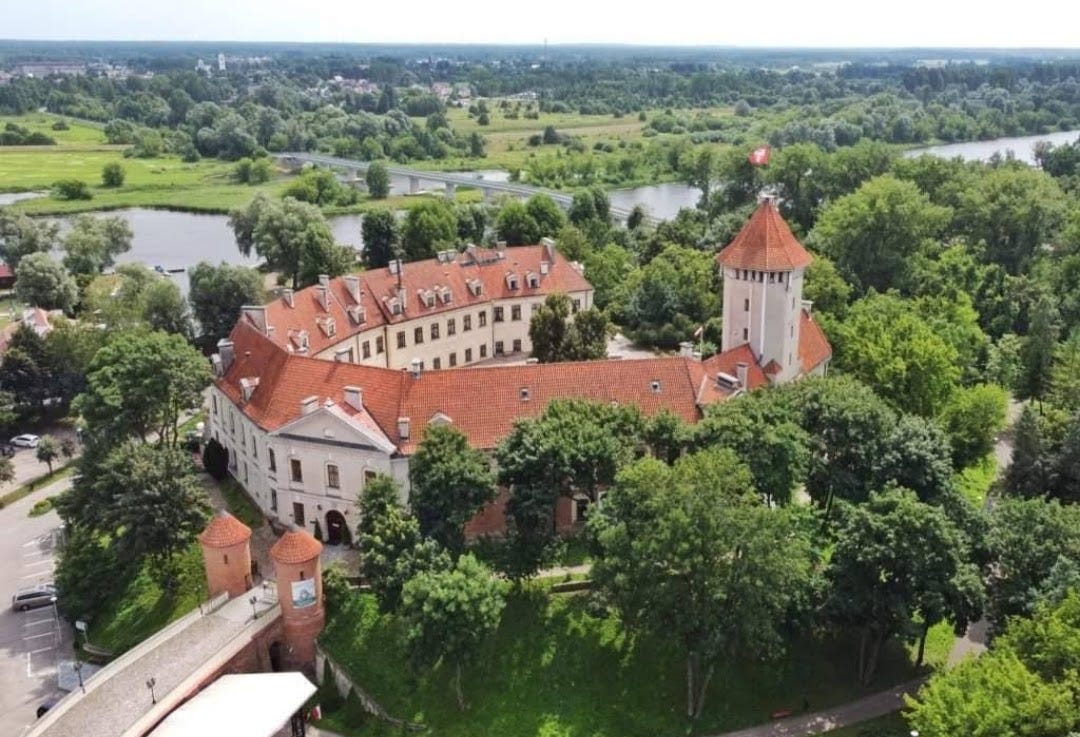
I often travel without knowing where I’ll be going the following day or sleeping that night. Probably because it suits me (despite the occasional frustrations) and often yields unexpected delights. Zamek Pultusk Dom Polonii, a 15th century castle along the Narew river, in Pułtuskis was an example. It was converted into a reasonably priced, quiet, comfortable hotel and offered outdoor garden dining surrounded by a quaint and picturesque town.
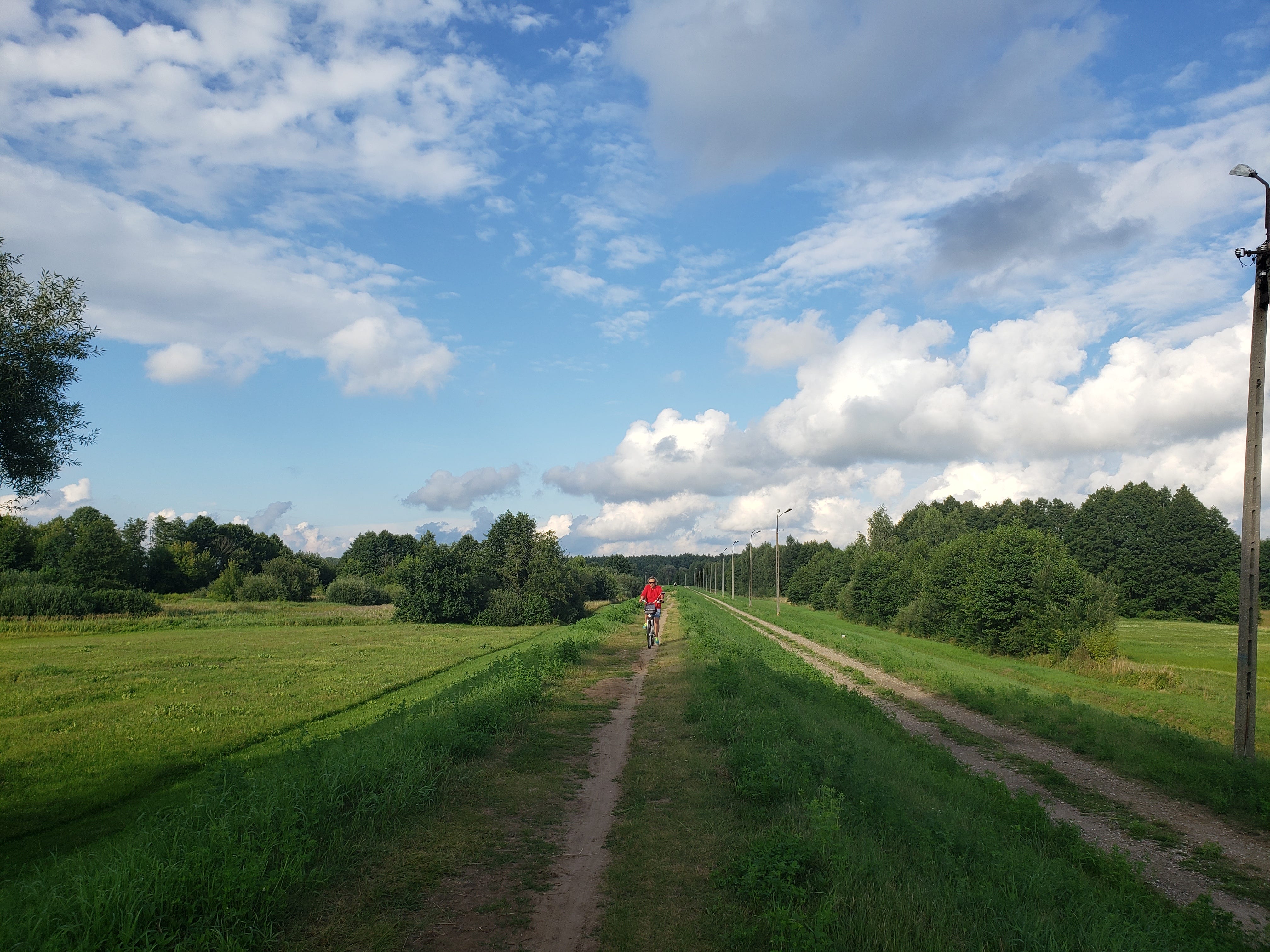
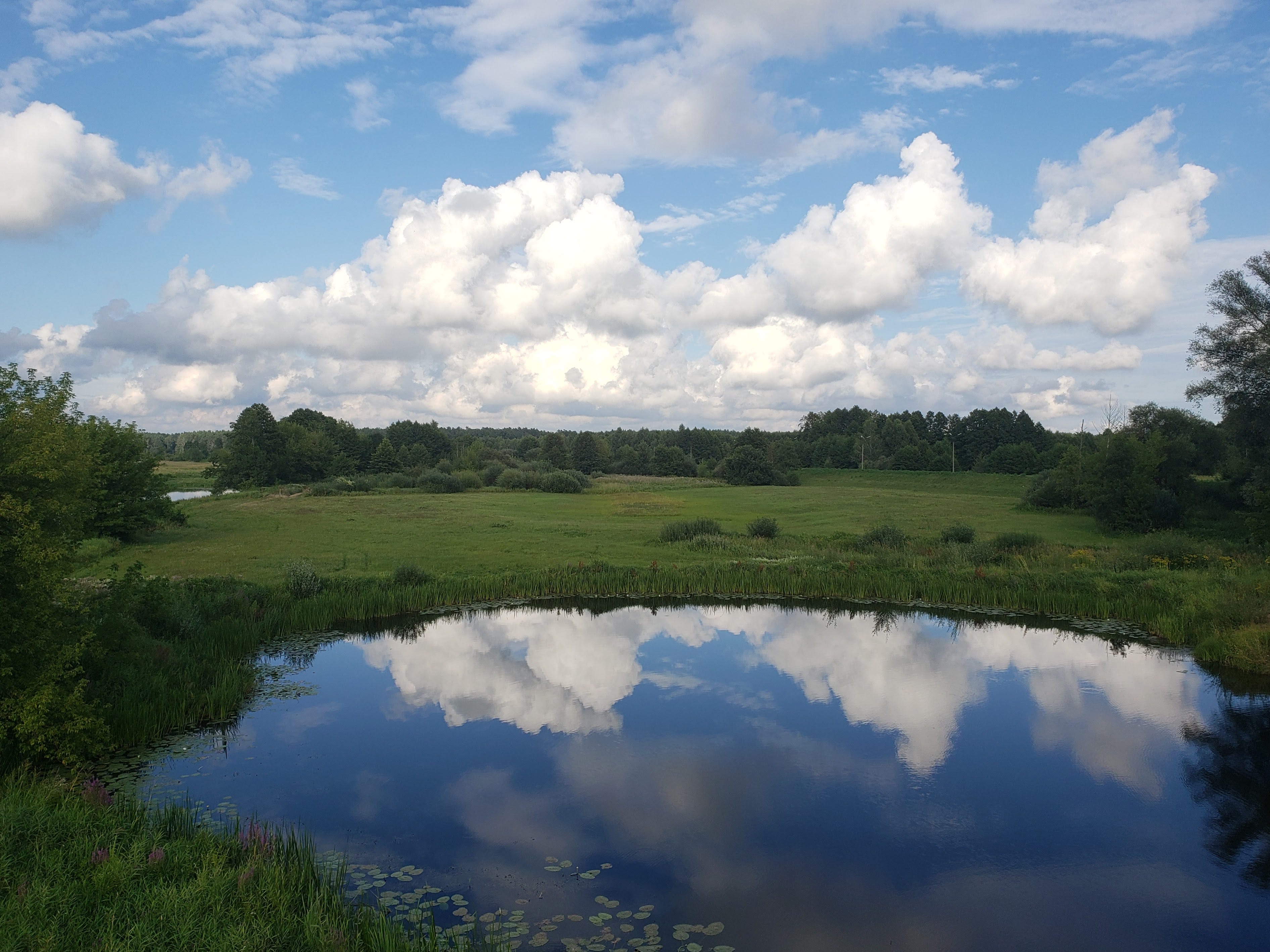
Generally driving no more than two hours a day allowed ample time to explore and admire nature--including storks perched high in their nests.
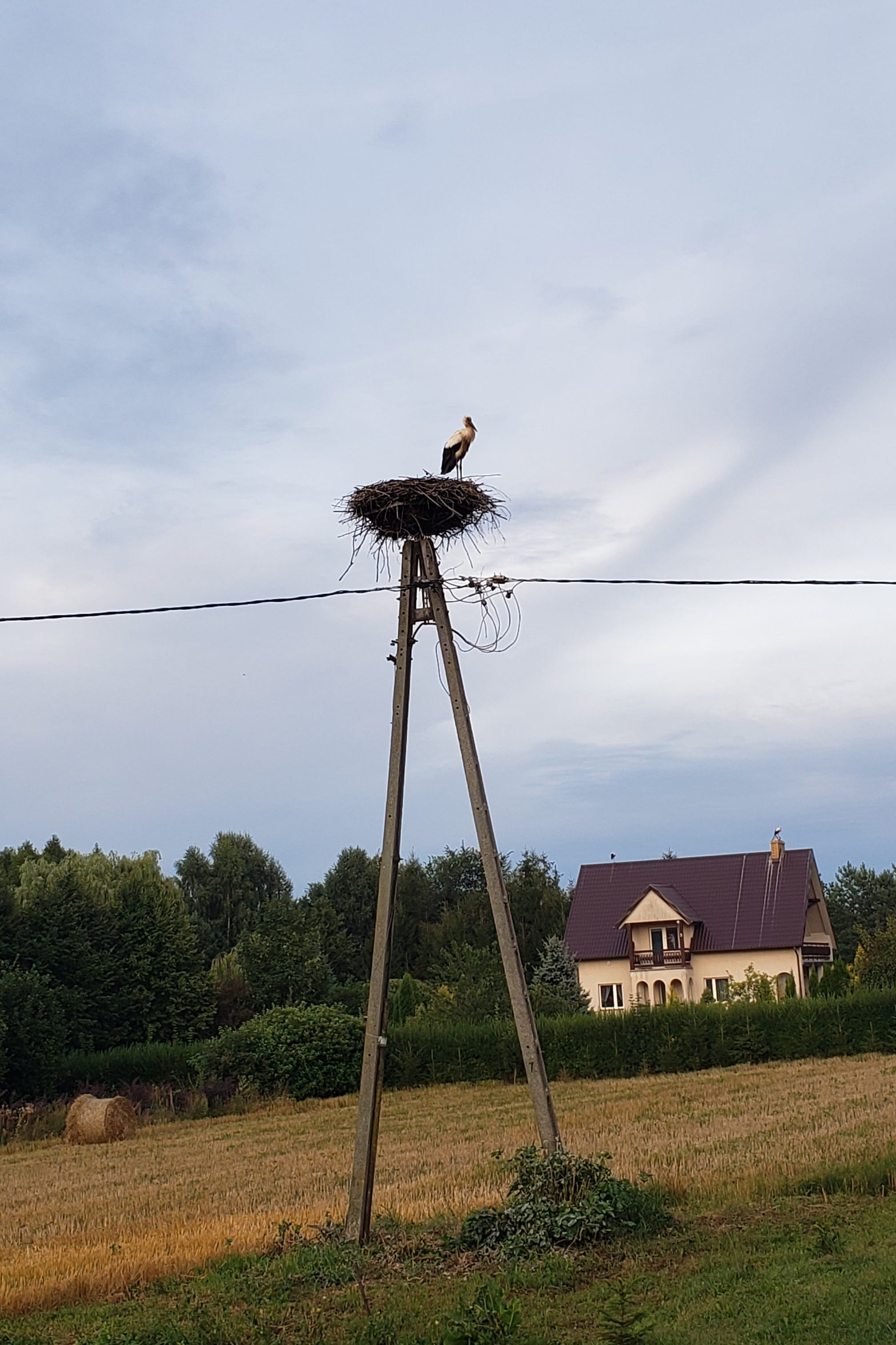
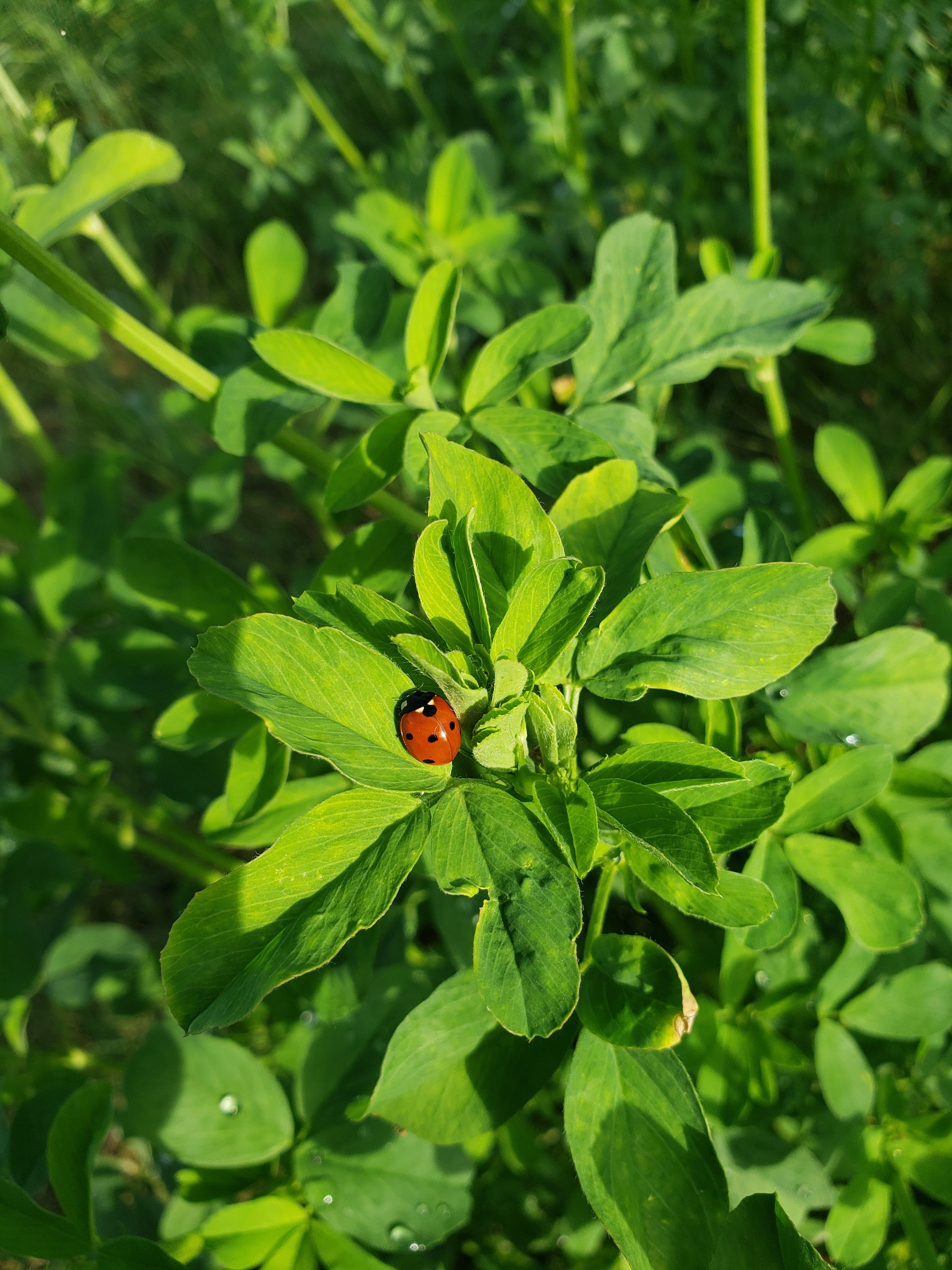
Each day yielded something of interest.
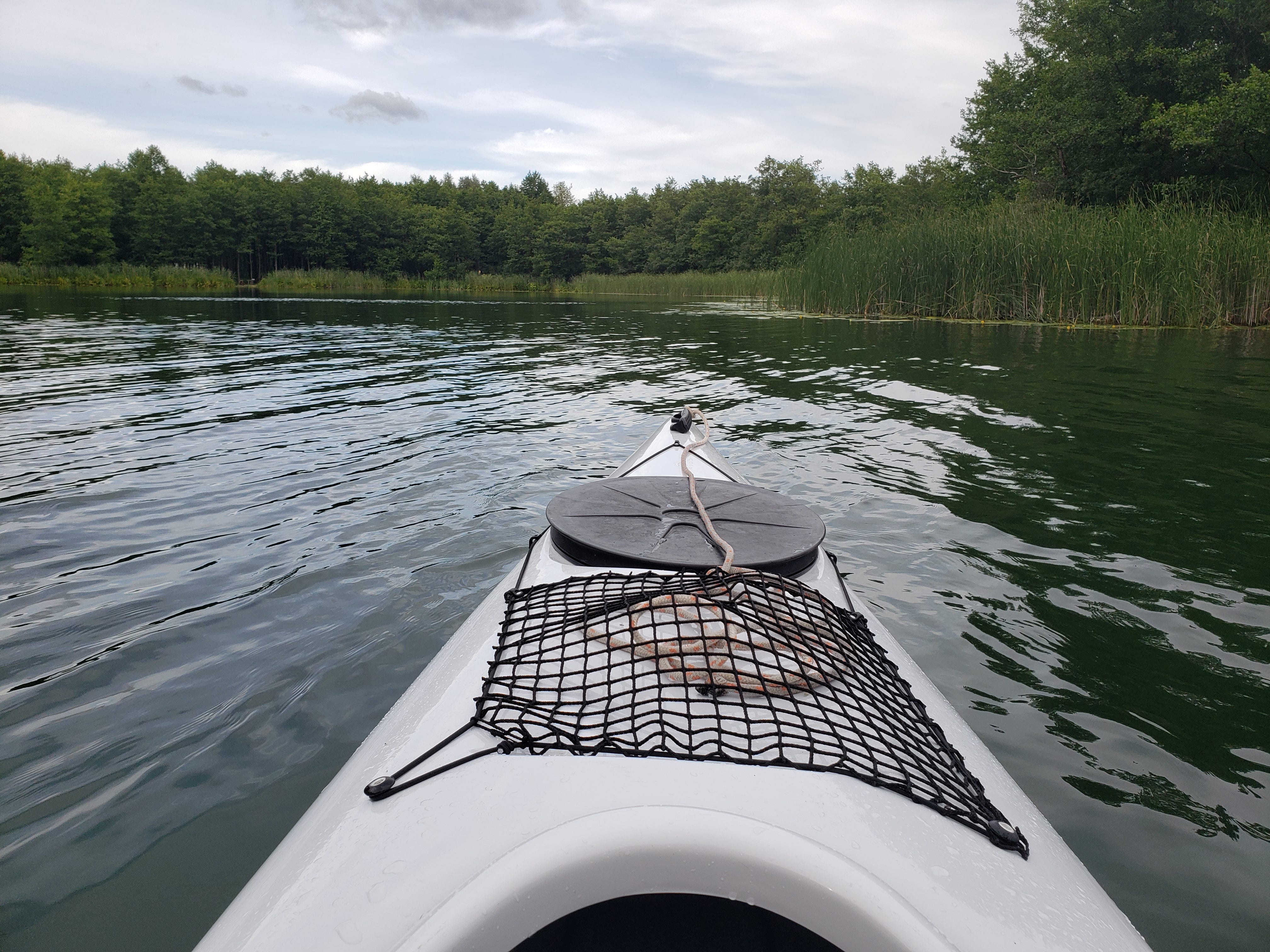
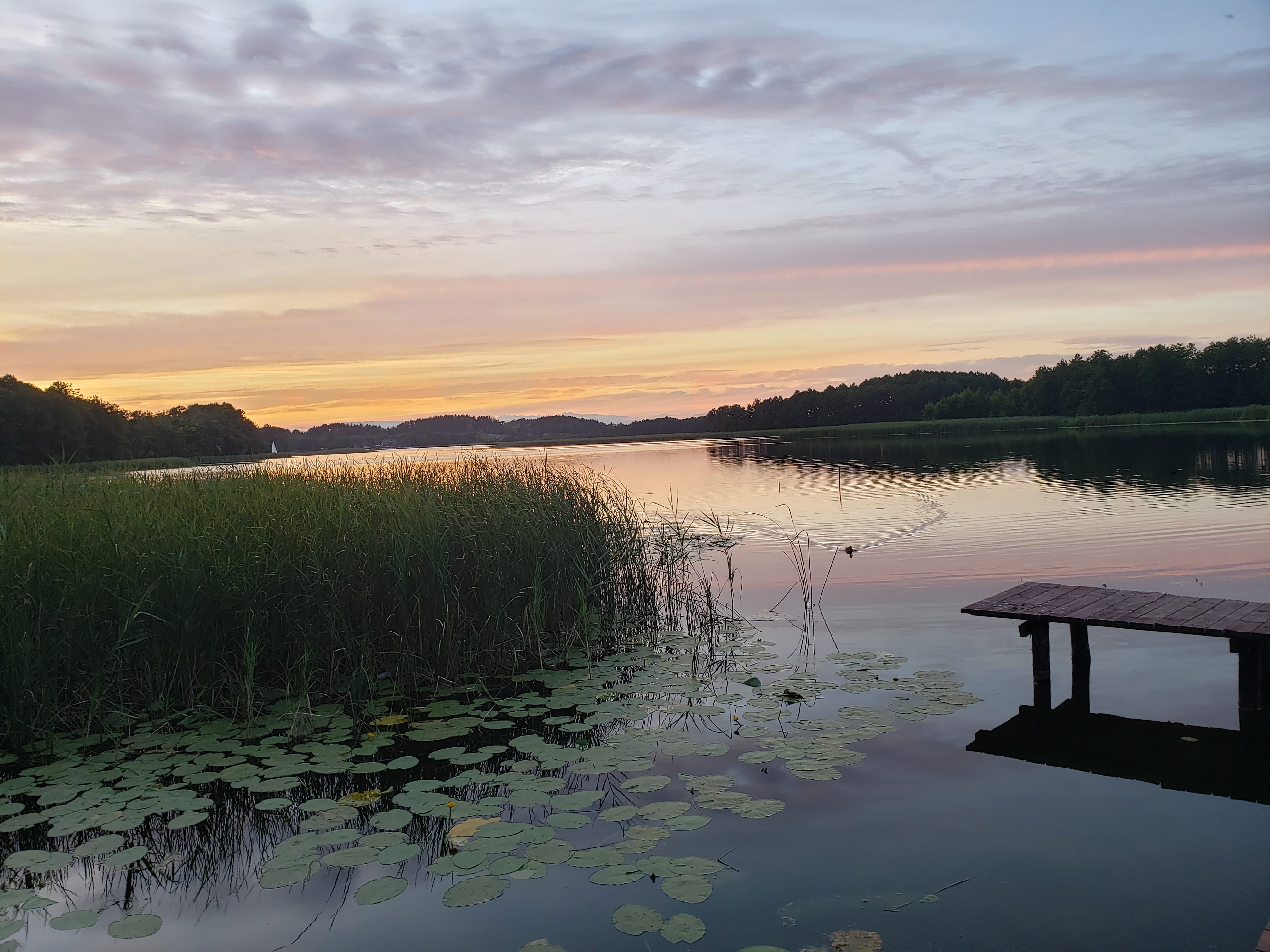
Following the advice of some locals I arrived at Wigry Lake. The kayak rentals was soon closing, but discovering that we could communicate with my imperfect Italian the owner kindly offered to rent me a kayak while she finished up for the day. I savored the moments watching dragonflies alight on lilypads, seabirds doing what seabirds do, and the change of light as day yielded to dusk.
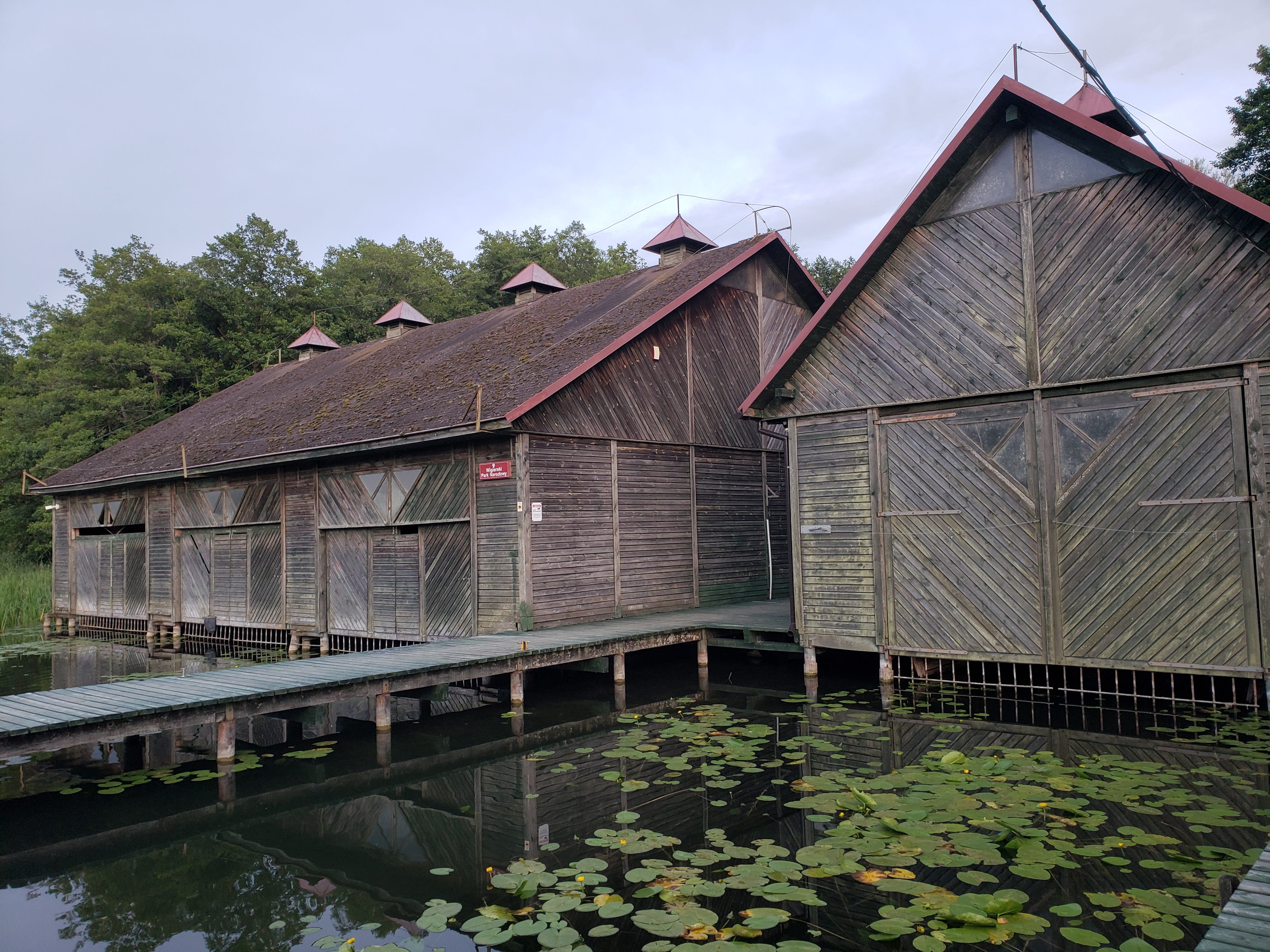
Overlooking the lake is Fundacja Wigry Pro, a 17th c monastery. I booked a room. It was a converted monk’s cell in a tiny tower with a small window and sparse furnishings. It had two single beds placed, it seemed strategically, apart at right angles. At 280 zoloty, about $75, it was in relation to my previous accommodations quite expensive, but it met my needs. (I wondered if the price had anything to do with the chance for guests to say that Pope John Paul II had stayed there too.)
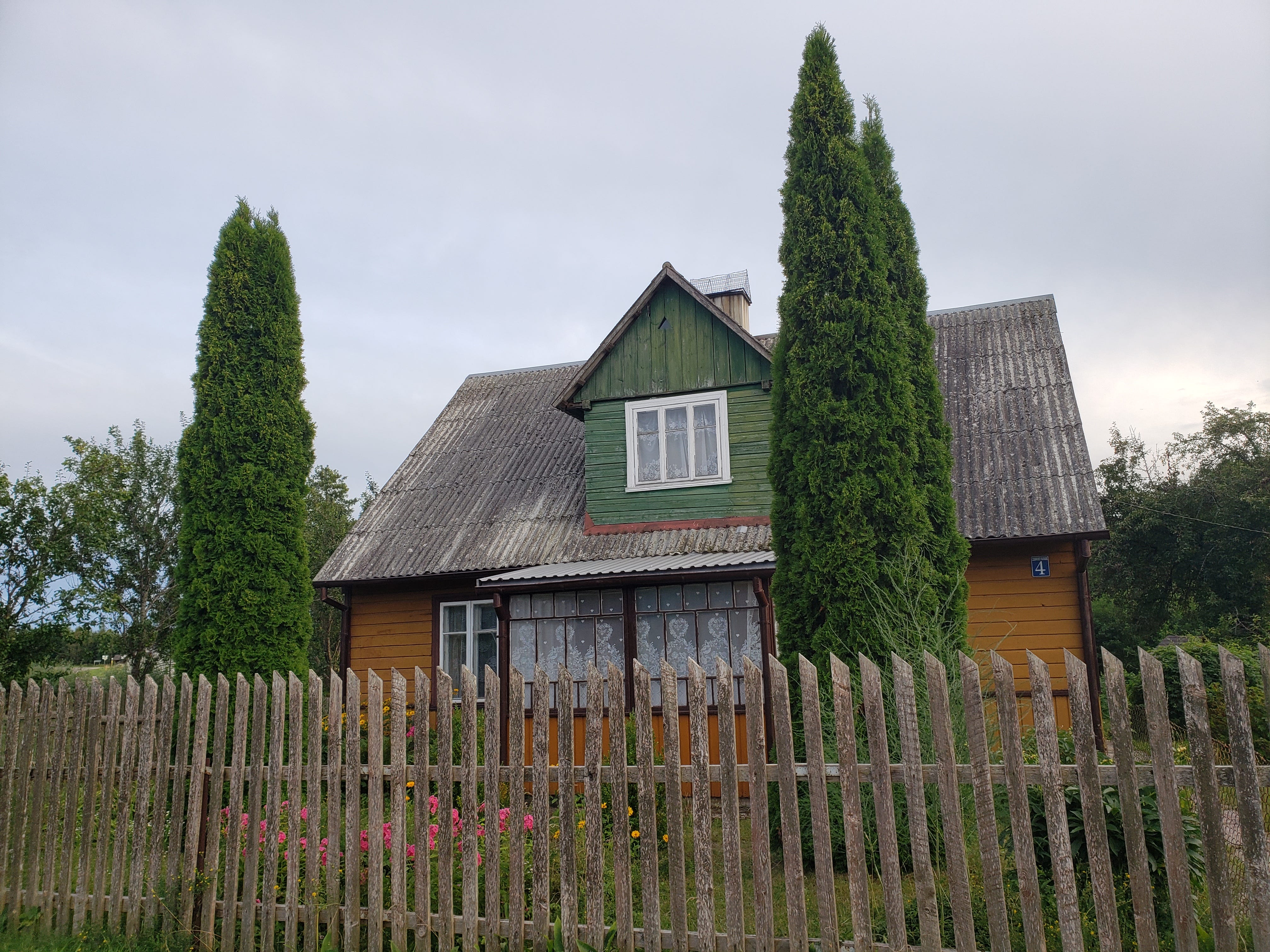
In a heavy downpour I reached the barely noticeable Polish/Lithuanian border, relieved to still have the car. The E.U. now makes traveling between its countries as easy as it is to travel between states in the US. It’s quite a different experience from previous days with border controls and changes of currency to contend with (some EU countries however like Poland, have kept their own currency). But back then your passport was stamped and it made a fine souvenir.
A tourist office stood just beyond the frontier. Entering the large, but sparse building an older man sat alone. He only spoke a bit of English but recommended I visit the Trakai Castle. I welcomed his advice and asked him how to say “Thank you” in Lithuanian. I was tickled to learn it sounds just like “Achoo.”
Choosing to visit the Baltic countries en lieu of Poland created a frustrating time constraint but I made the best of it. I eschewed major highways whenever possible which sometimes meant driving on unpaved, heavily pot-holed, but interesting backroads of farms and forests. Lots of forests.
Although it was August, the weather suddenly turned cold and the heavy downpours added to its chill. Admittedly, I was tired too. I passed the fairytale Trakai castle then a lovely hotel, Viva Trakai, steps from a lake. I didn't hesitate and checked in.


I treated myself to a hot shower, watching the rain fall outside, reading and watching movies inside from the warmth of my cozy room. Exploring could wait until tomorrow.
Next stop: Vilnius.
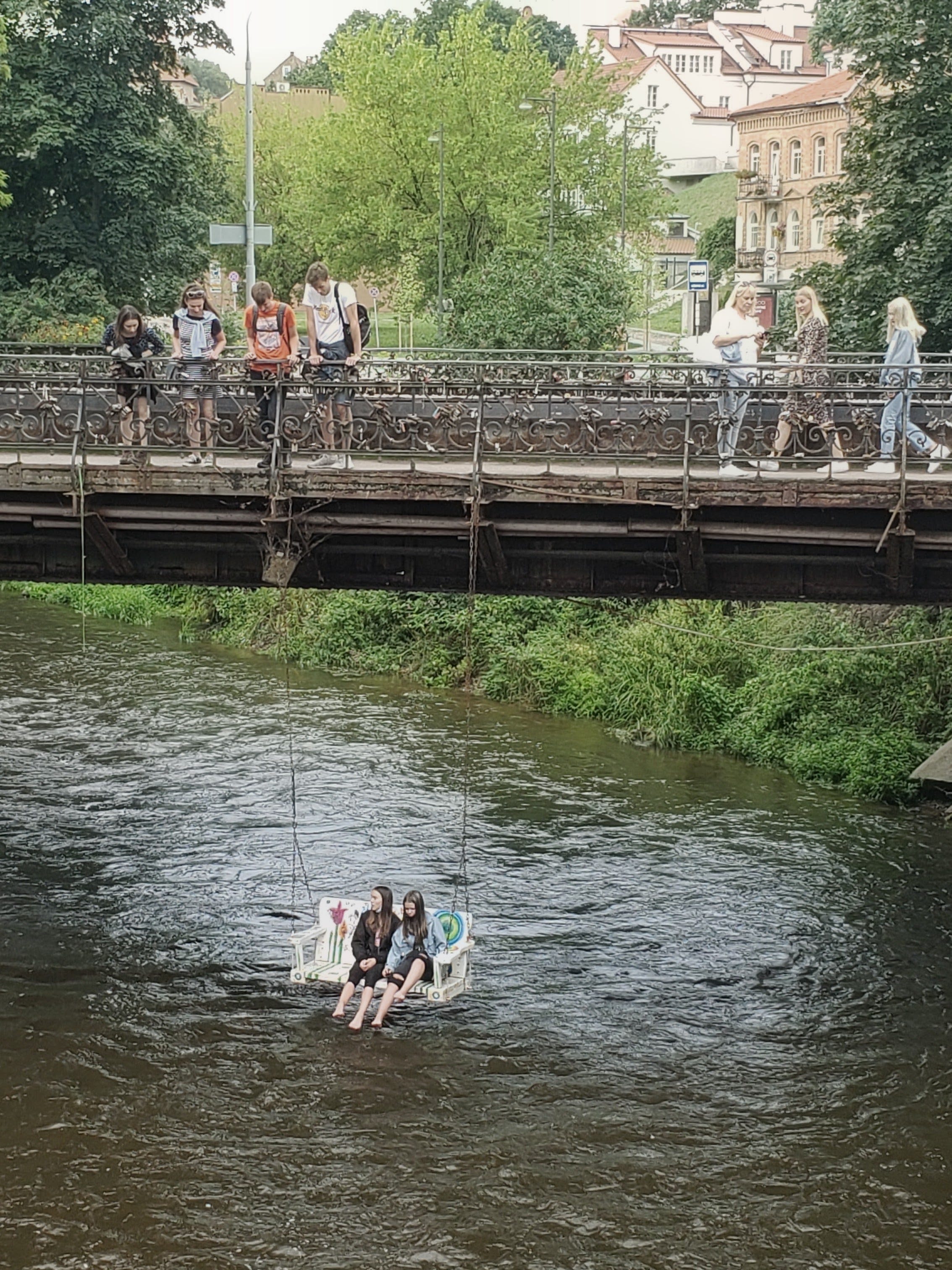
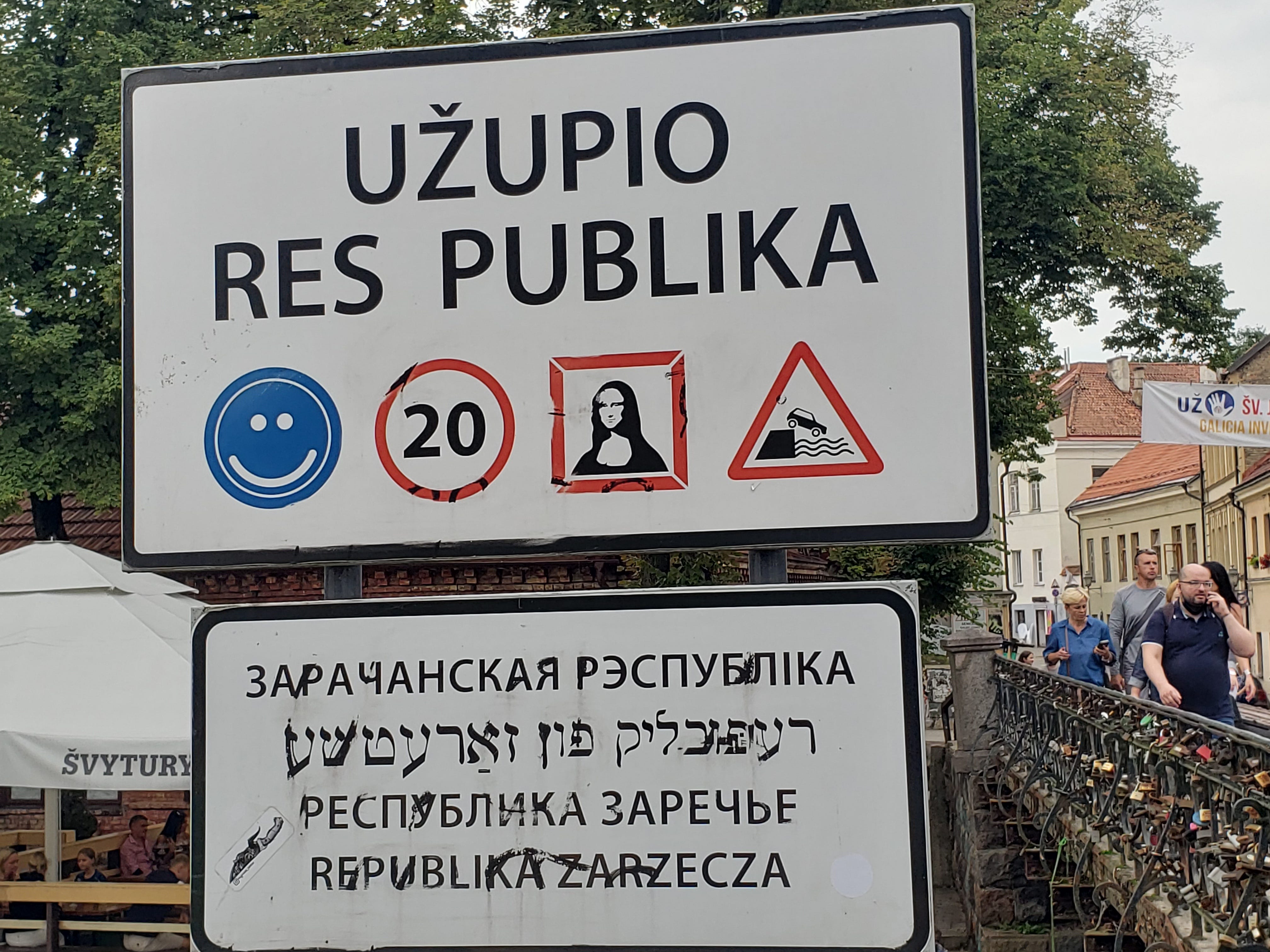
I spent far too short a time in Vilnius and ironically, I’d learn a few years later that my grandmother, who I thought was Polish, was actually born here (understandable given the countries shared history and shifting borders). Once again the language was foreign, but the herring, blintzes, borscht, kugel were familiar. Food remains the strongest connection I have to my family's past.
I had no specific agenda after Vilnius except to make my way further north. People recommended the Curonian Spit. I happily returned to the sea.
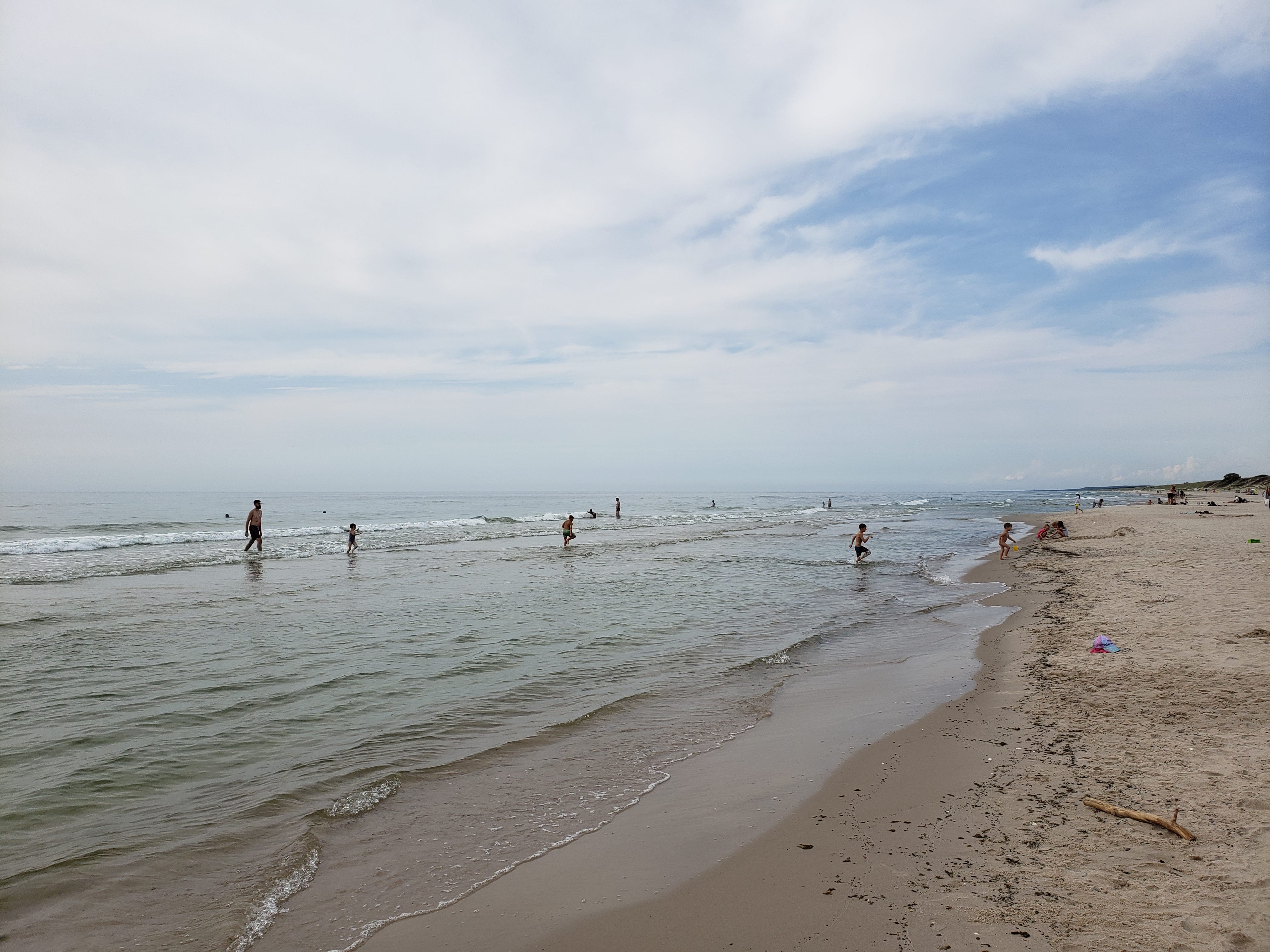
Arriving on the spit in Nica, a popular tourist destination via a short ferry ride from Klaipeda, available accommodations were easily spotted. I met a lovely woman who was renting a small but sweet apartment with terrace and bicycle steps from the beach. I spent the day exploring amid old wooden houses and along the forest trails.
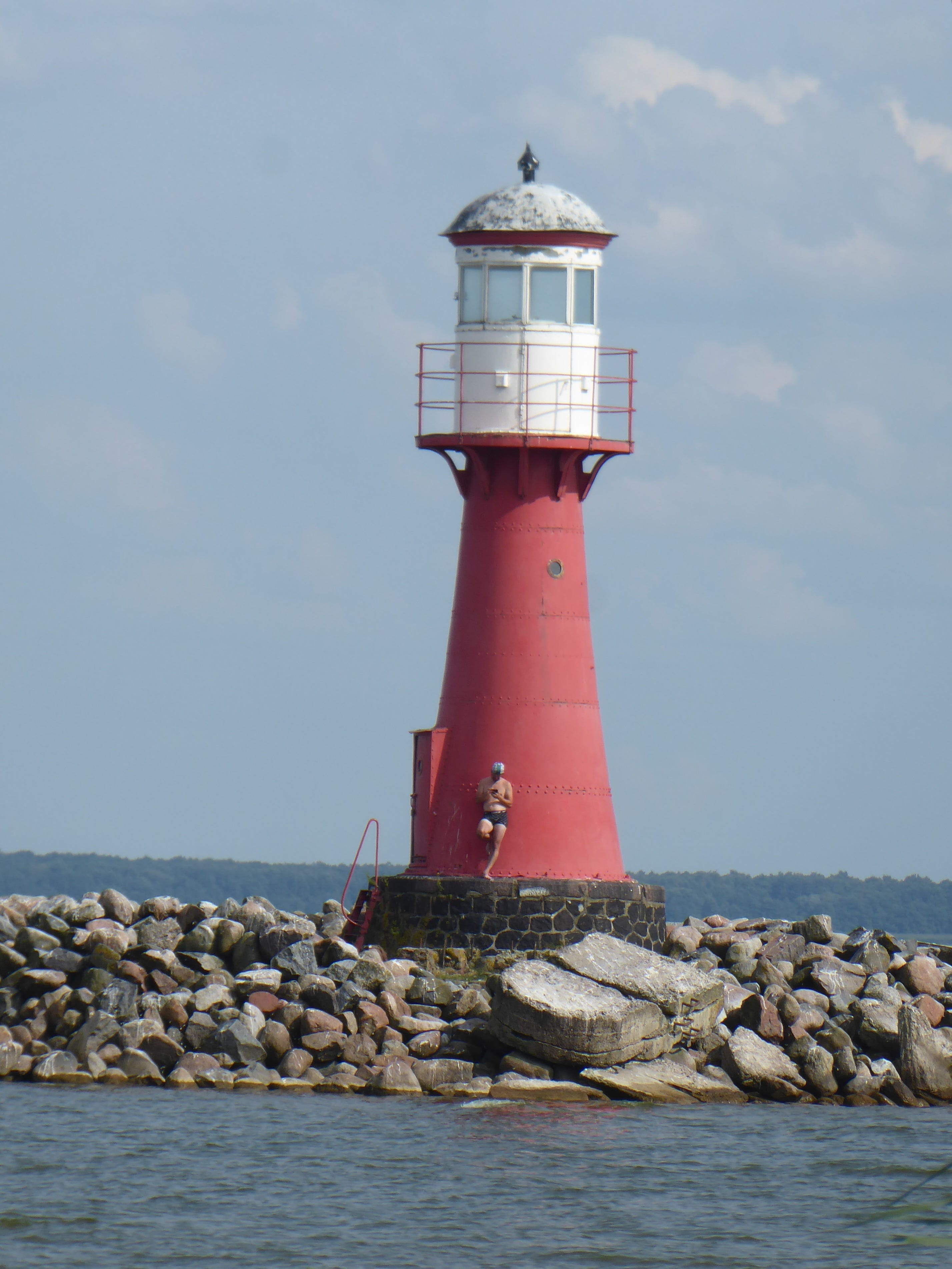
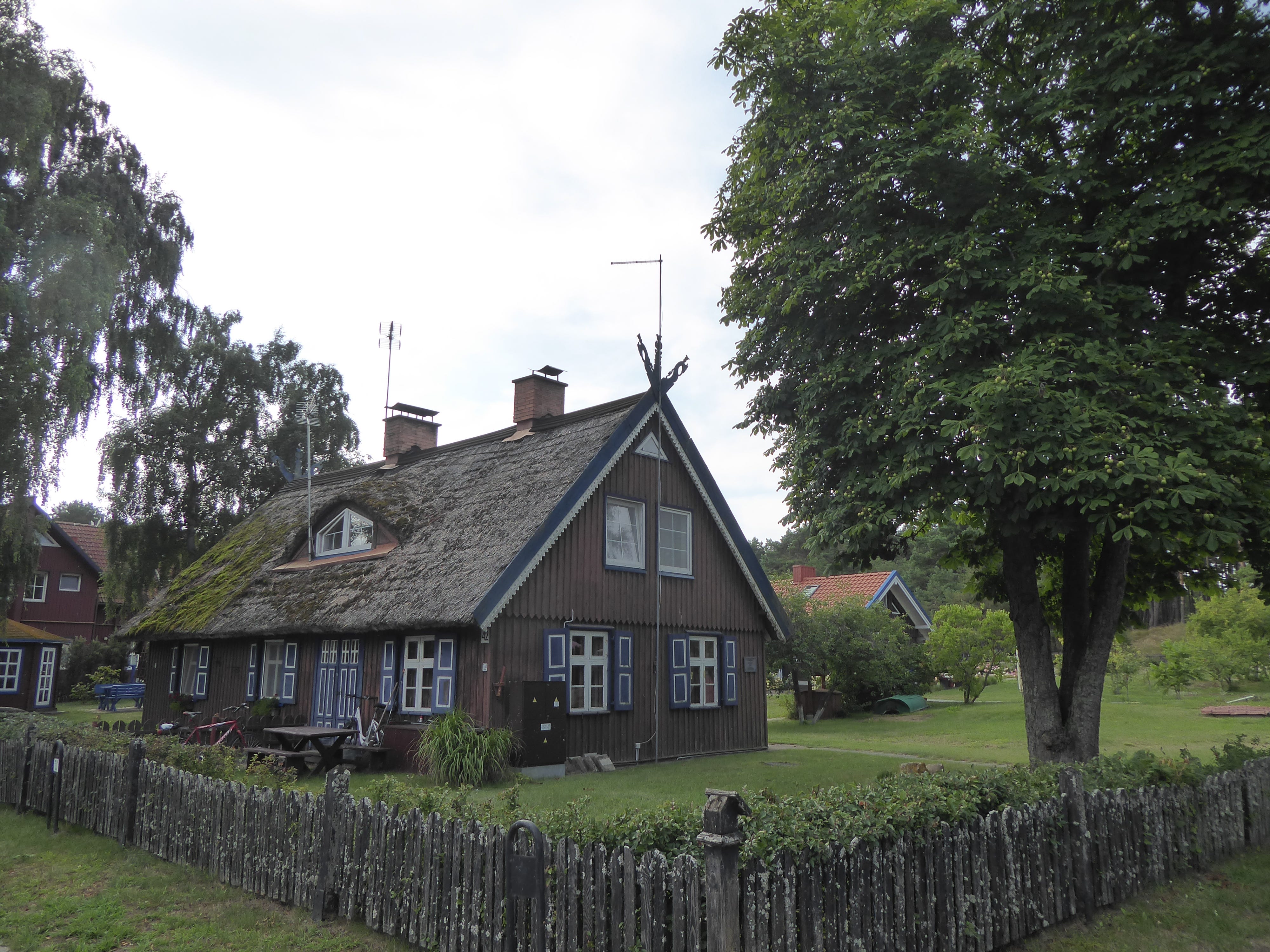
Back on the mainland I followed the Baltic Sea coast up to Liepāja, the third largest city in Latvia. But where I stayed had a small town feel.


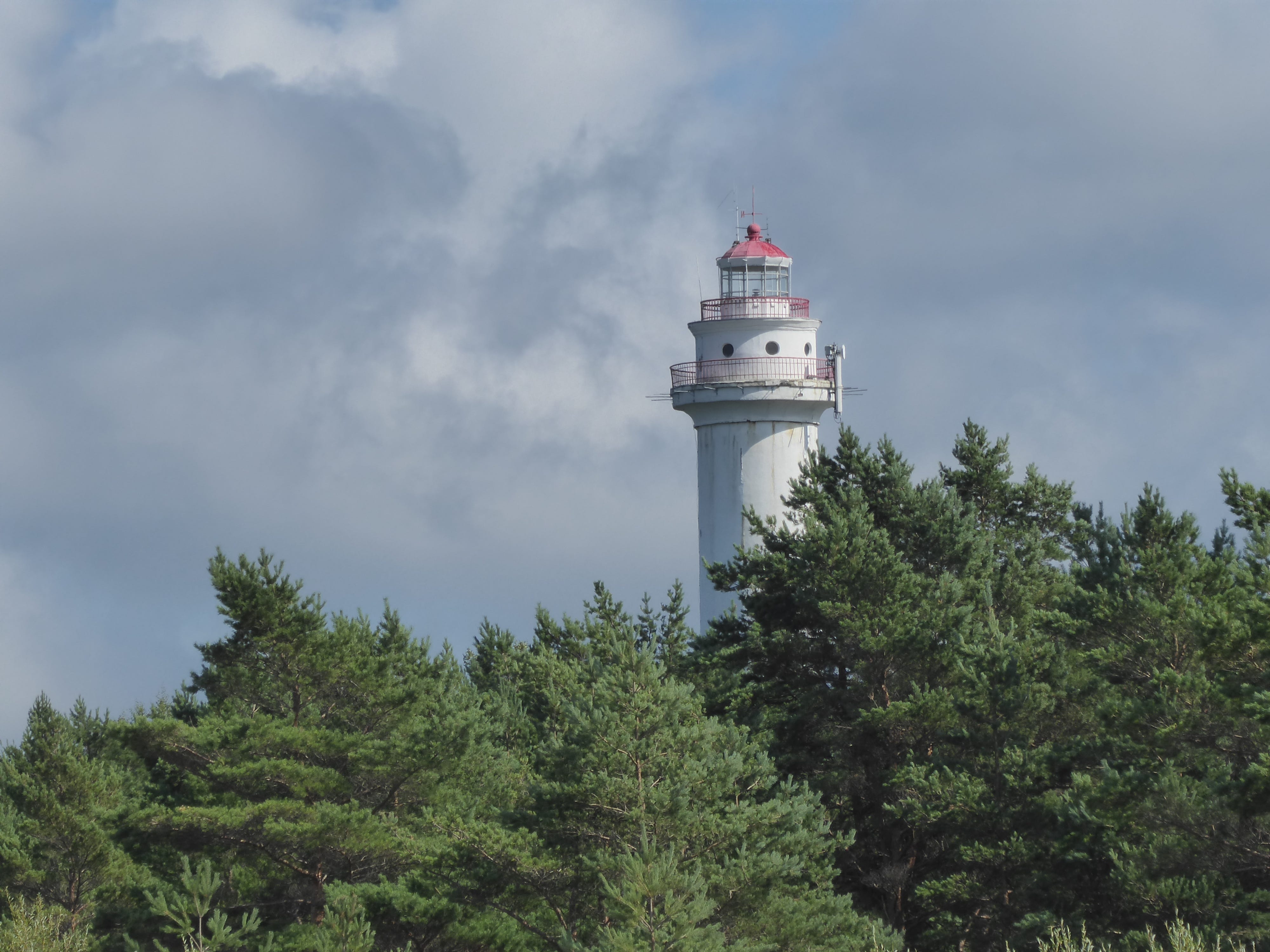
Continuing up to Slītere National Park the following day I saw a sign for cabins. They were quite rustic but the location by the coast was appealing. Hoping to stay the night the kind owner regretted to tell me they were all booked. I was ready to drive on but a lighthouse beckoned me and wandered on to the beach.
I was rewarded with a series of whimsical creations--artist(s) unknown.


And other interesting sights.


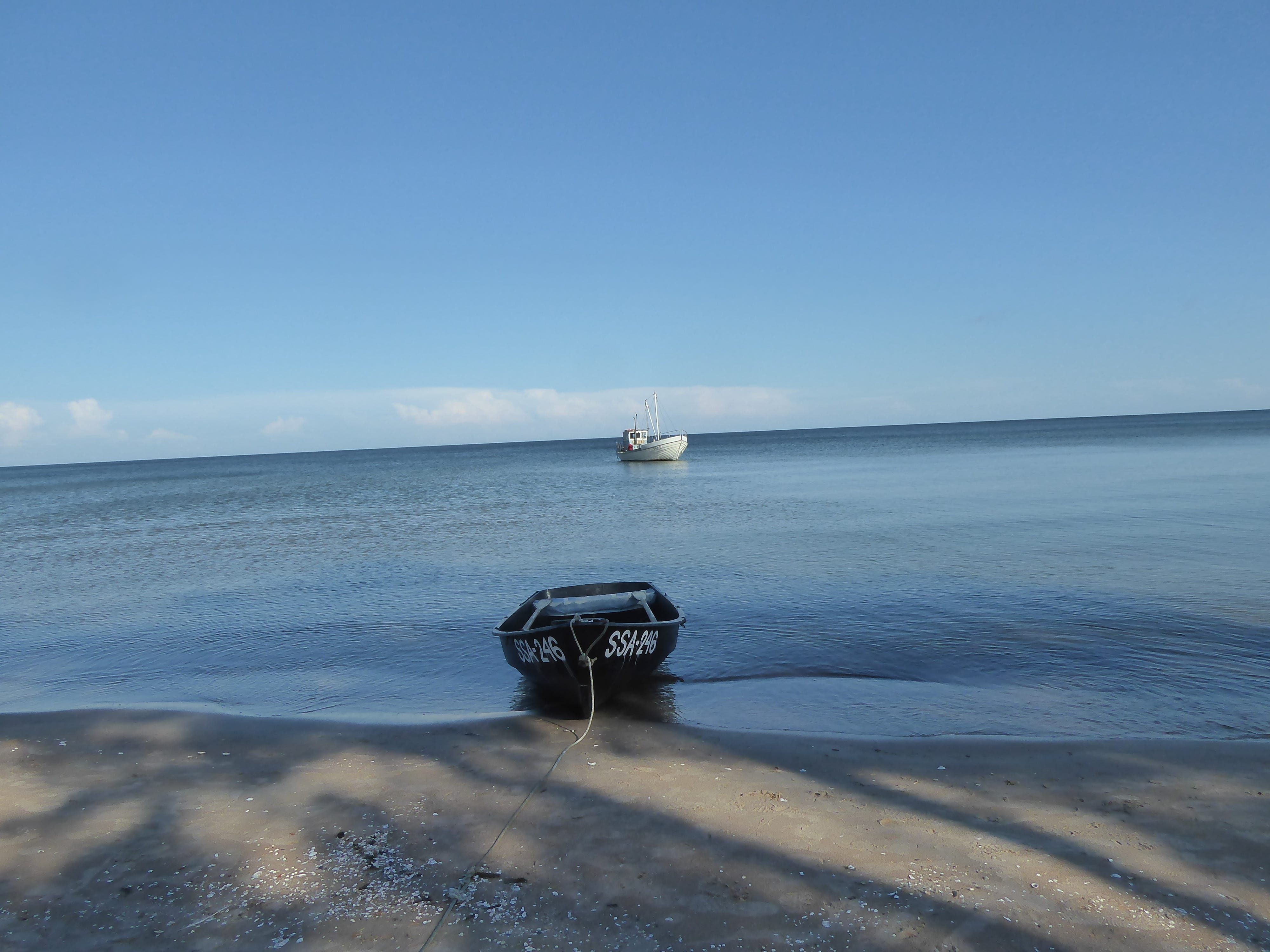
I eventually found a place that evening near the tip of Cape Kolka in a pleasant hotel/restaurant. It was on the peaceful main road dotted with little more than some homes. I continued on to Riga, Latvia's capital, the following day.


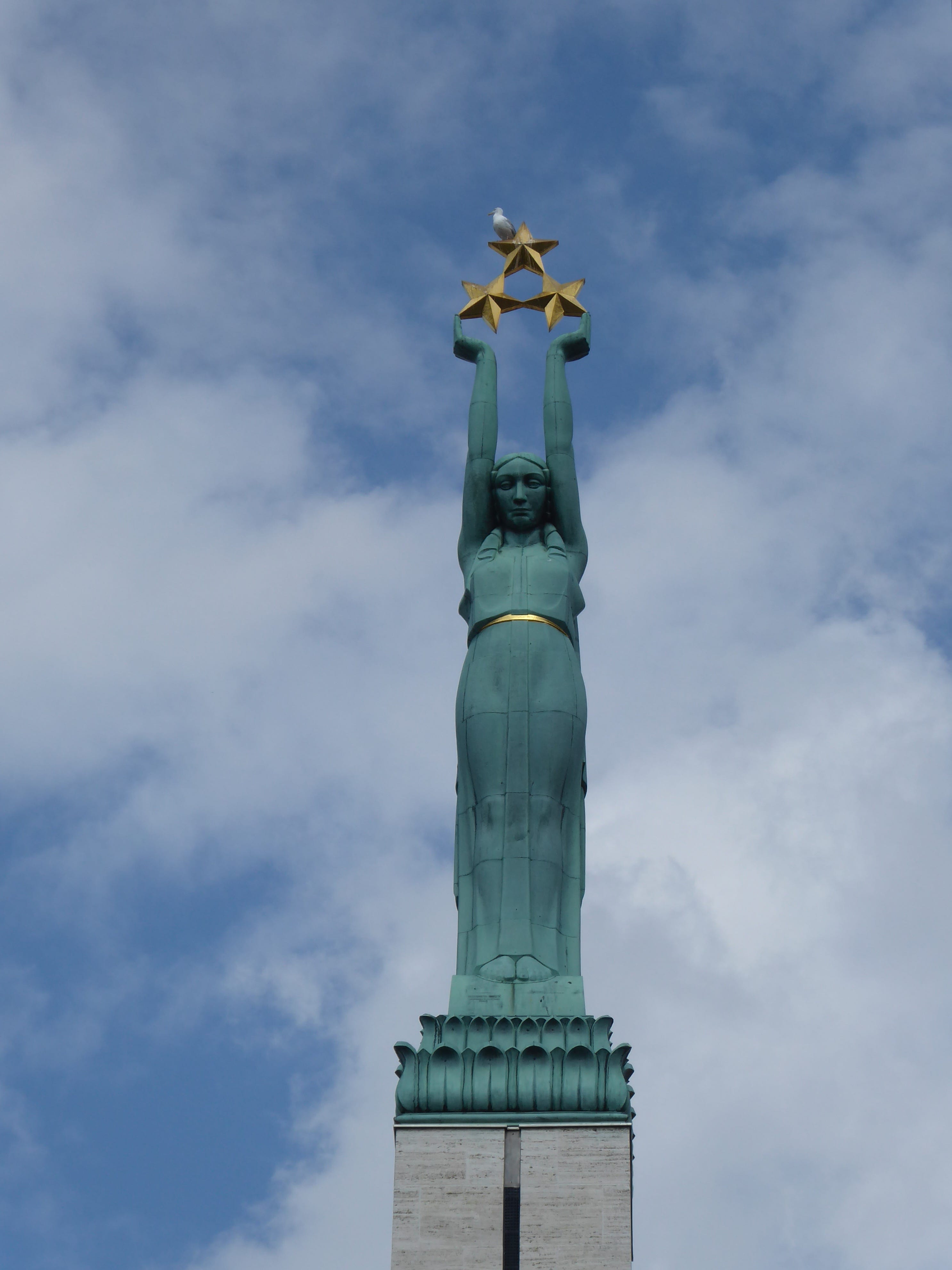
In Riga, once again time passed too quickly, but I enjoyed a river cruise, watching intrepid water skiiers on the city's canal, wandering in the parks, streets and squares, and the juxtaposition of new and old. I would also learn, years later, that this city too had been home to my forebears.


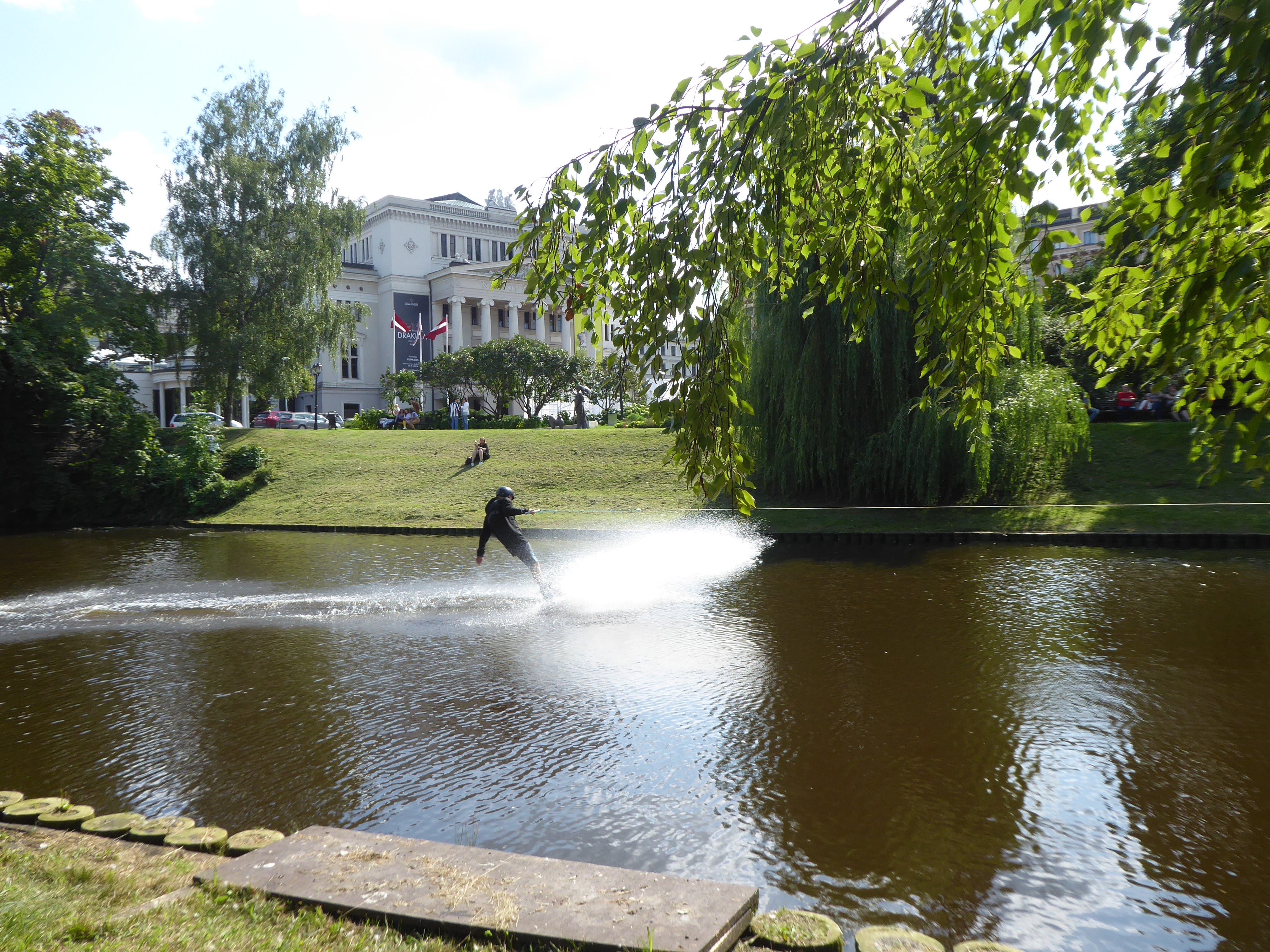
After Riga, I reached the small city Pärnu in Estonia with charming places for children and adults alike.


It also had a ferry to the intriguing island of Kihnu in the Gulf of Riga.
Kihnu is a fascinating, beautiful, tiny island known as Europe’s last matriarchy. Women continue to wear bright, self woven striped skirts and carry on ancient traditions. Regrettably I was only able to secure one night, but visited its museum and rented a bike. Taking a break I stopped by a wooden building marked Kurase Pood and learned “pood” was “shop”. With subtle borders, it was sometimes difficult to discern one country from another, but the different languages helped.


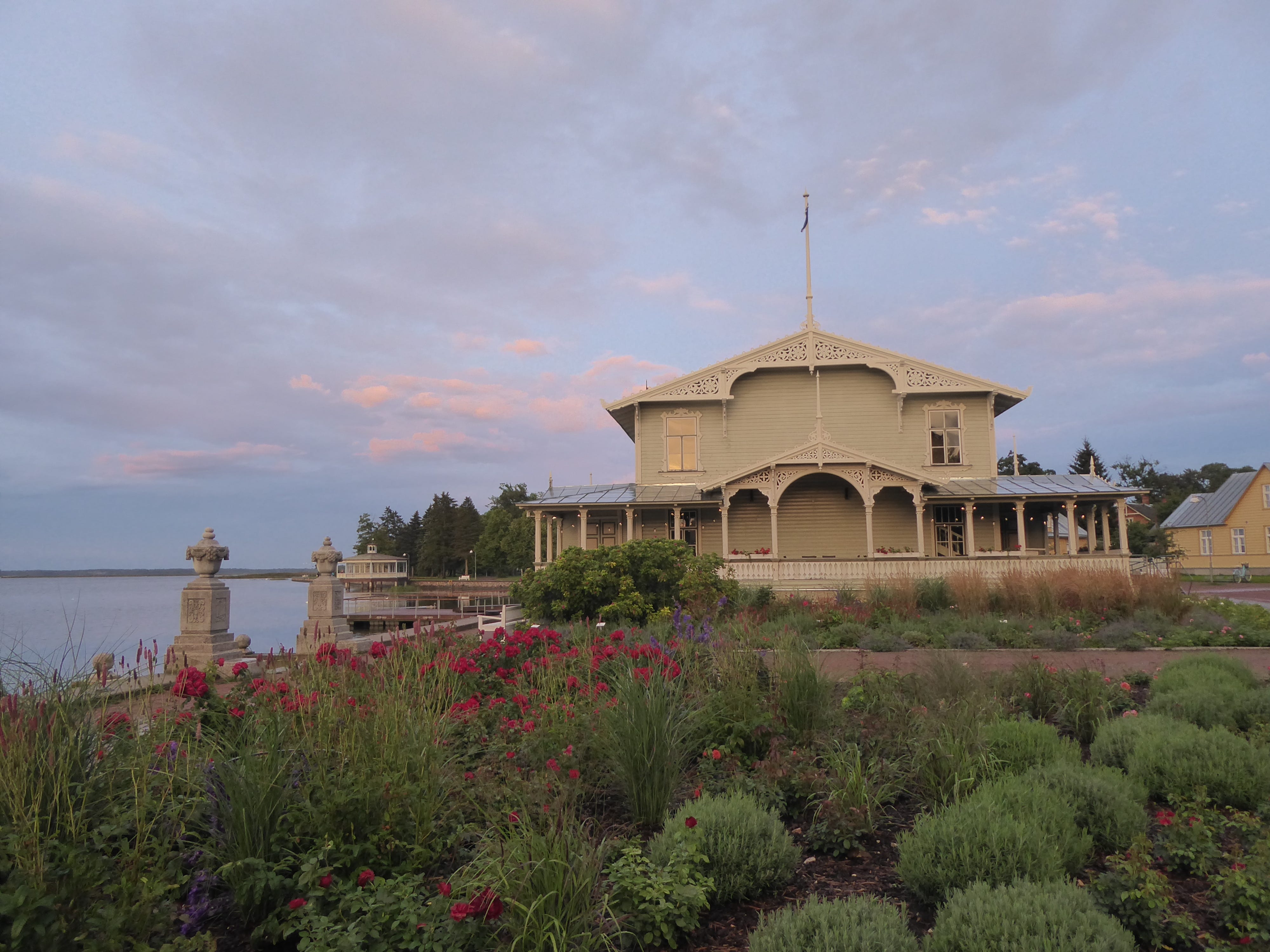
Back on the mainland I followed the coast up to Haapsalu, Estonia's oldest resort town. Picturesque and peaceful, it's known for its medieval castle, 19th c wooden buildings, and spa. I treated myself to enjoying all of them.
Next stop Tallinn.


Visiting Tallinn is like entering the pages of a storybook and once again deserved more time. But three days revealed some of its treasures and included an impromptu dinner with a young Ukranian woman. A conversation with an older resident revealed her profound appreciation for Estonia's independence, having lived under Soviet rule and, given its geography, her ongoing concern for the nation’s security.
With the remaining days dwindling I decided to go as far as Käsmu, an hour north-west of Tallinn, before making my way back to Poland.


Käsmu is an idyllic town and I was immediately wooed by its charm. Despite its stunning location it remained delightfully underdeveloped with just a handful of places to eat, sleep, and shop. However, I was only able to find accommodations for a single night. Circumstances being different, I easily imagined spending weeks there. With the time I had I wandered along the coastal and forest trails.
Soomaa National Park with its trails of boardwalks through bogs and forests was my next stop.
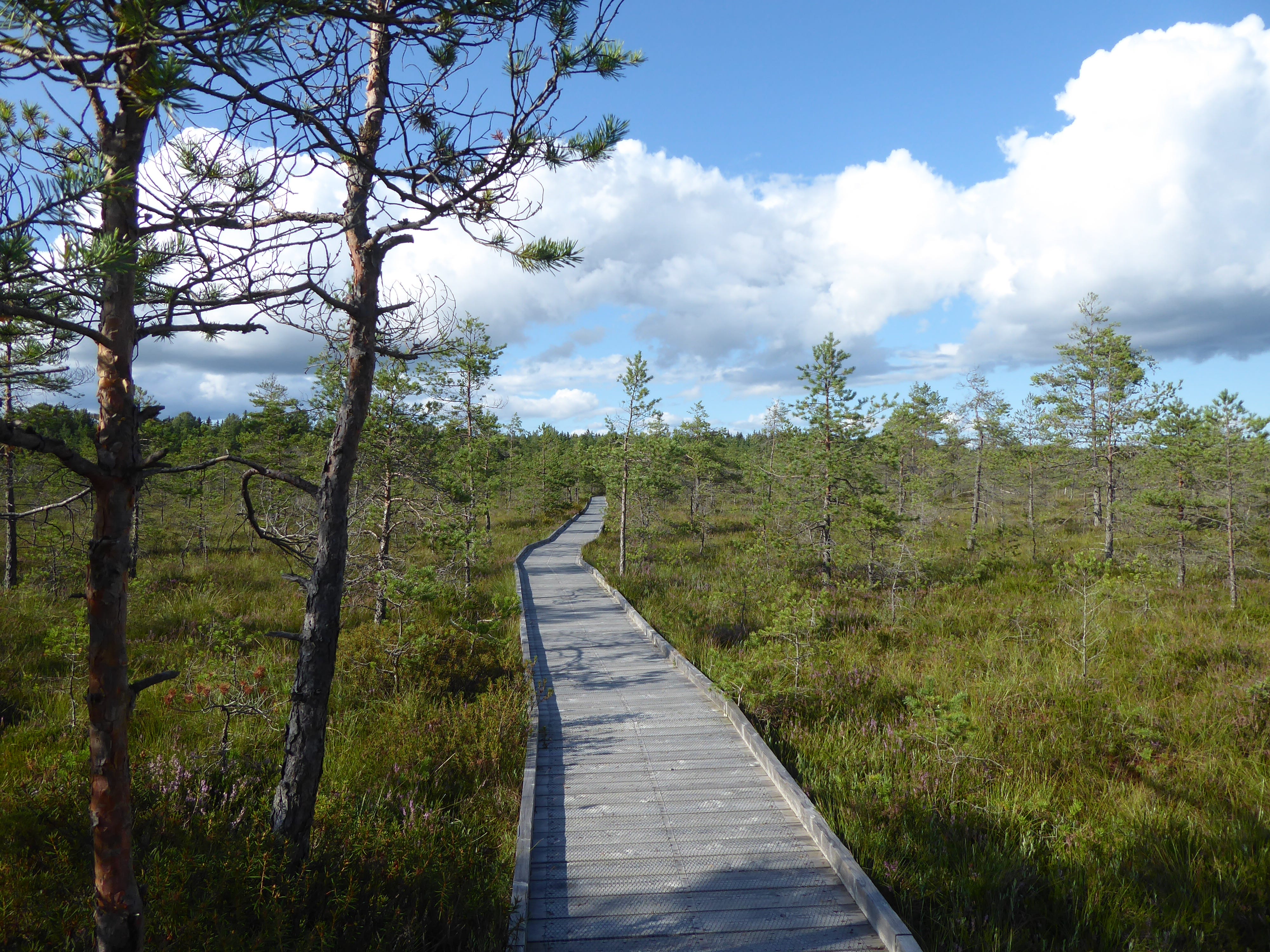
Then on to Gauja National Park, Latvia for a quick stop.


Gutman's Cave is a popular tourist attraction with graffiti dating back to the 17th c.
Soon afterwards I was again walking in a bog on boardwalks and enjoying the birds, views, and solitude.

Ragaciema sedums on the coast warranted a visit too.


And few places, if any, resemble the Hill of Crosses, a pilgrimage site from 1831. It began after a rebellion against Russian rule. During the 20th c Soviet authorities razed it multiple times, but it was always quickly and defiantly rebuilt. Visitors and pilgrims continue to leave contributions.


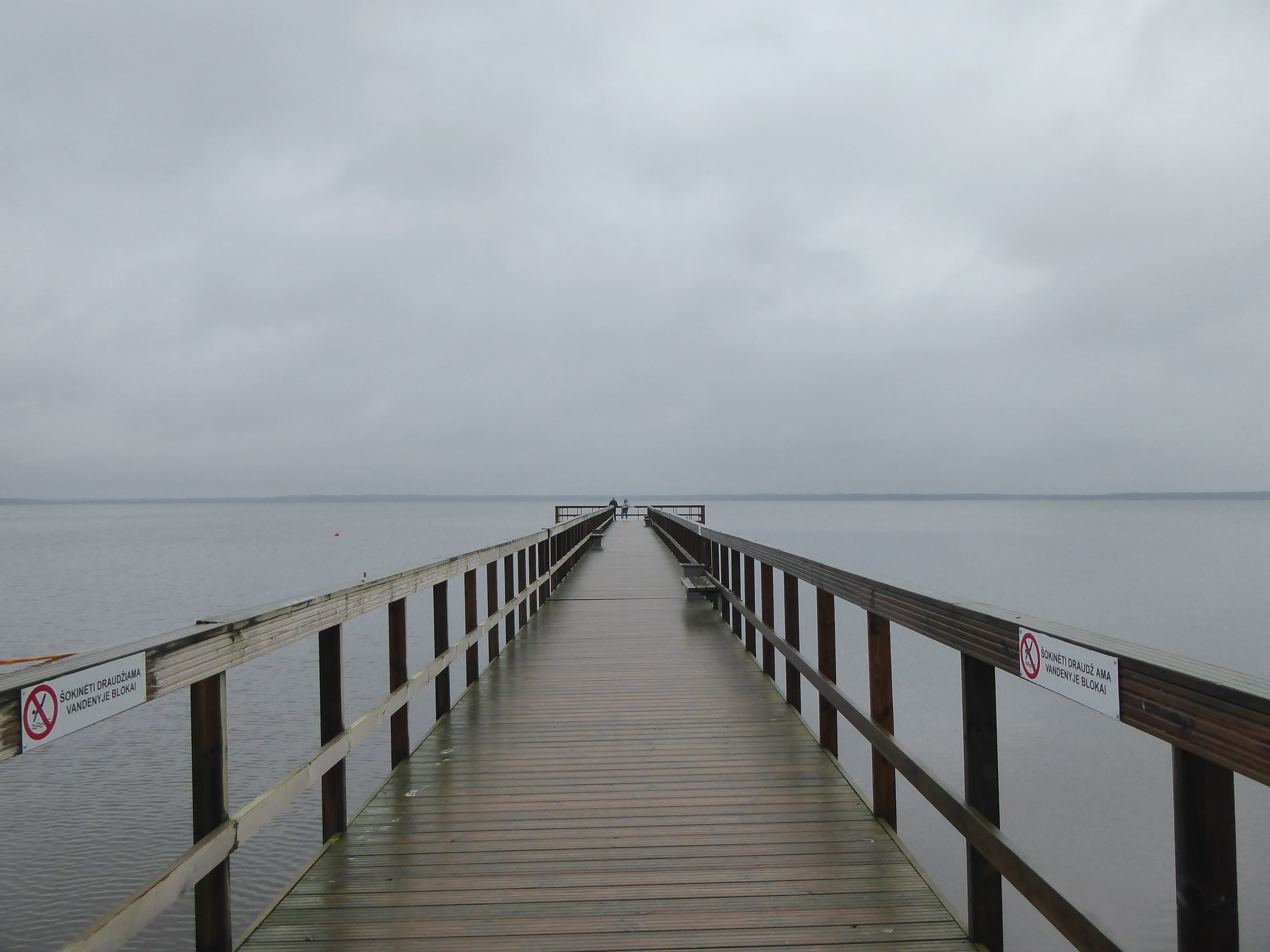
I spent some quiet moments nearby on Rekyva Lake before continuing to Kaunas, Lithuania's second largest city. Kaunas is particularly noteworthy for its old town and street art.


With my rental car contract coming to an end, I arranged to drop the car off in Warsaw. This not only gave me more time to spend in Warsaw, but less time to drive in Poland.
En route I stopped in several smaller towns. One was Giżycko, Poland, a popular tourist destination for sailing in the Masurian Lake District. In addition to strolling and seeing its fortress, I enjoyed watching the rare hand-operated swingbridge in action.


Next stop Warsaw.


I’d somehow pictured Warsaw as a drab industrial city, but its extraordinary old town, scenic, vibrant river promenade, excellent museums, charming cafes, restaurants, and small shops (I couldn't resist buying a clothbound copy of Walt Whitman's Leaves of Grass--in English) shattered this image.
What is particularly striking about Warsaw is its meticulous reconstruction of its medieval architecture. Ninety percent of its historical monuments and landmark buildings were completely reduced to rubble during WWII.
The city also offered tributes, museums, and monuments evoking reflection, sadness, and inspiration. Great efforts have been made to insure that past horrors and tragedies as well as people’s courage and sacrifice will not be forgotten.
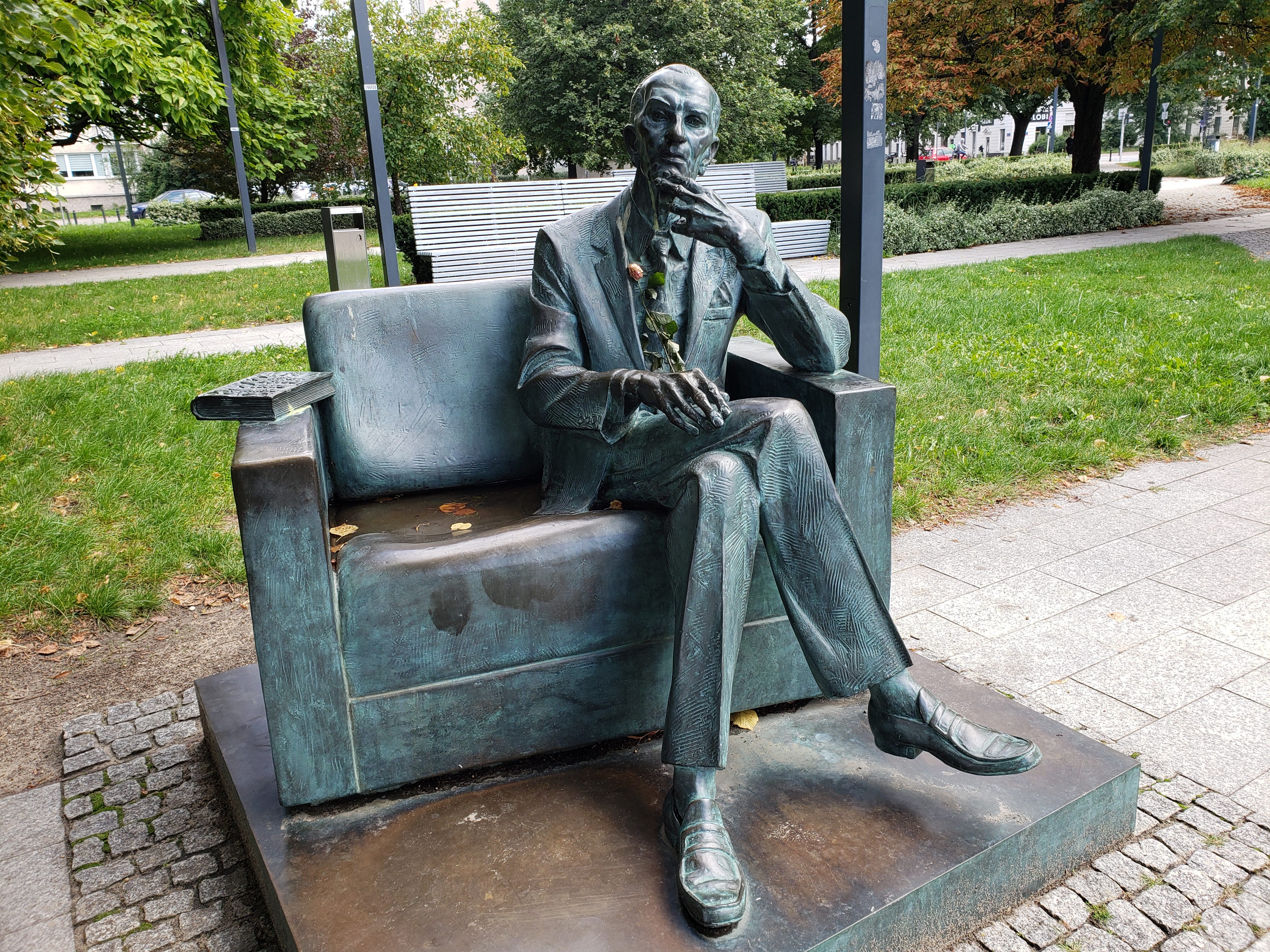
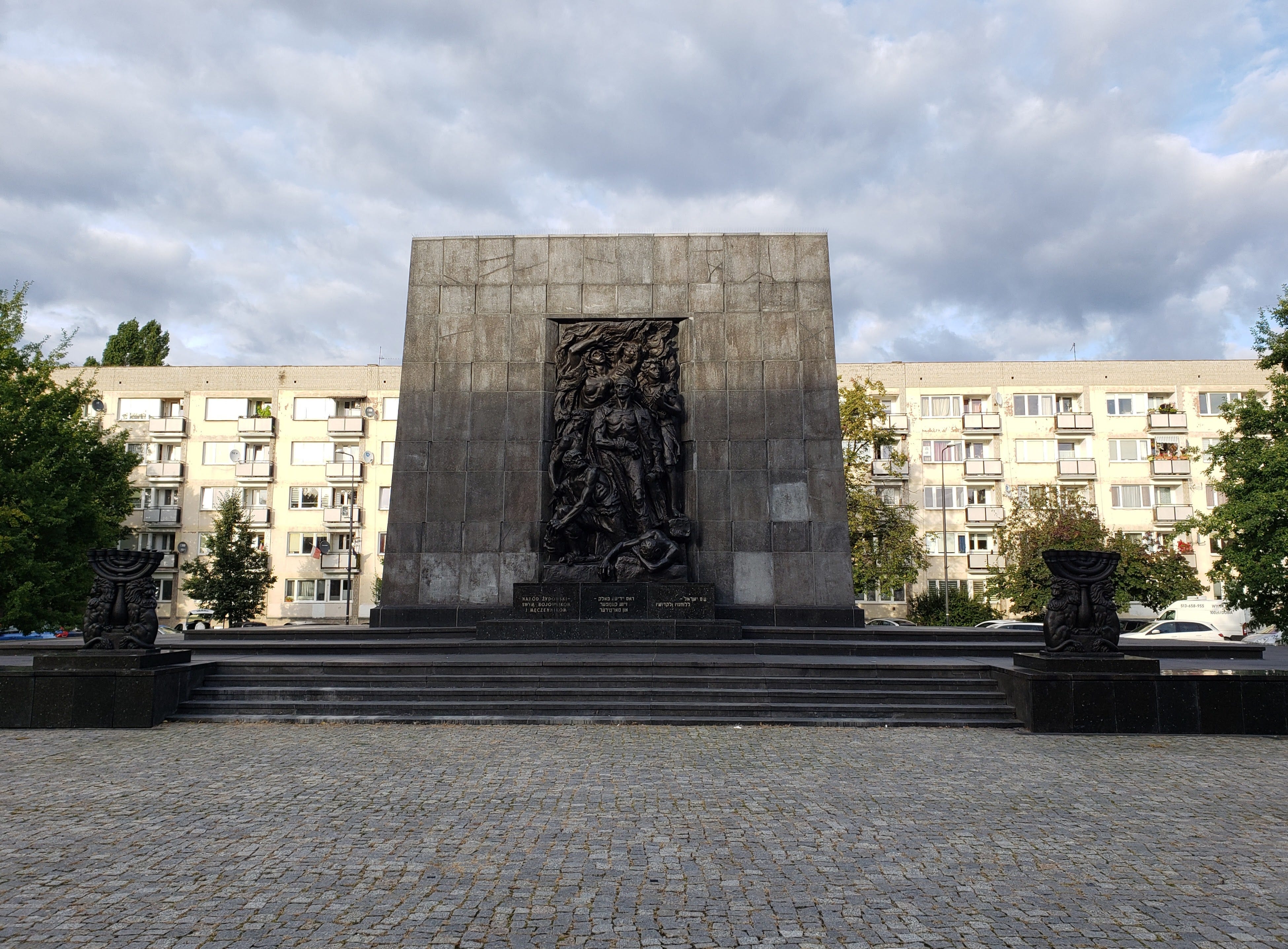
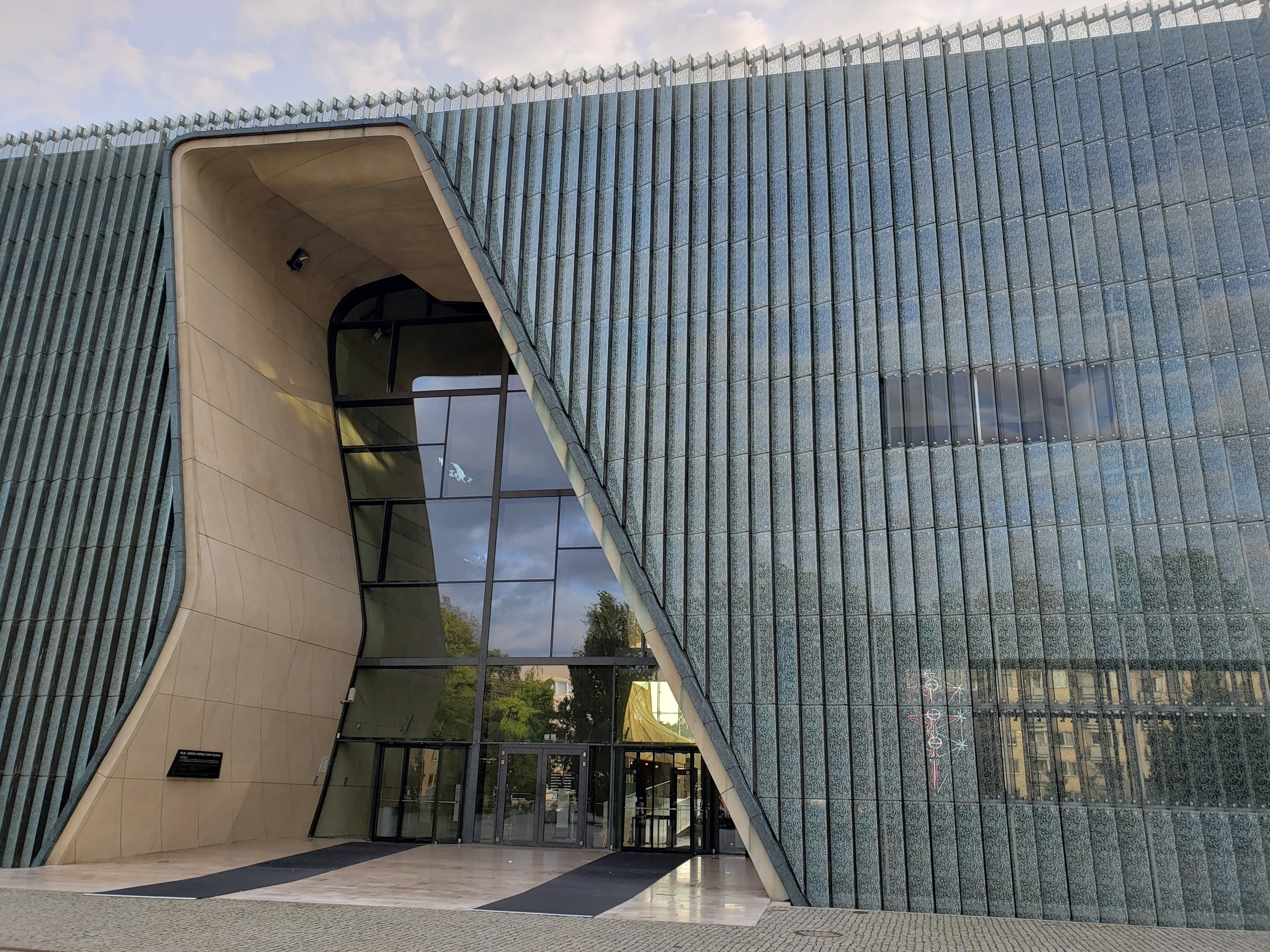
I was filled with varying emotions. Thoughts of people's resilience resonated.
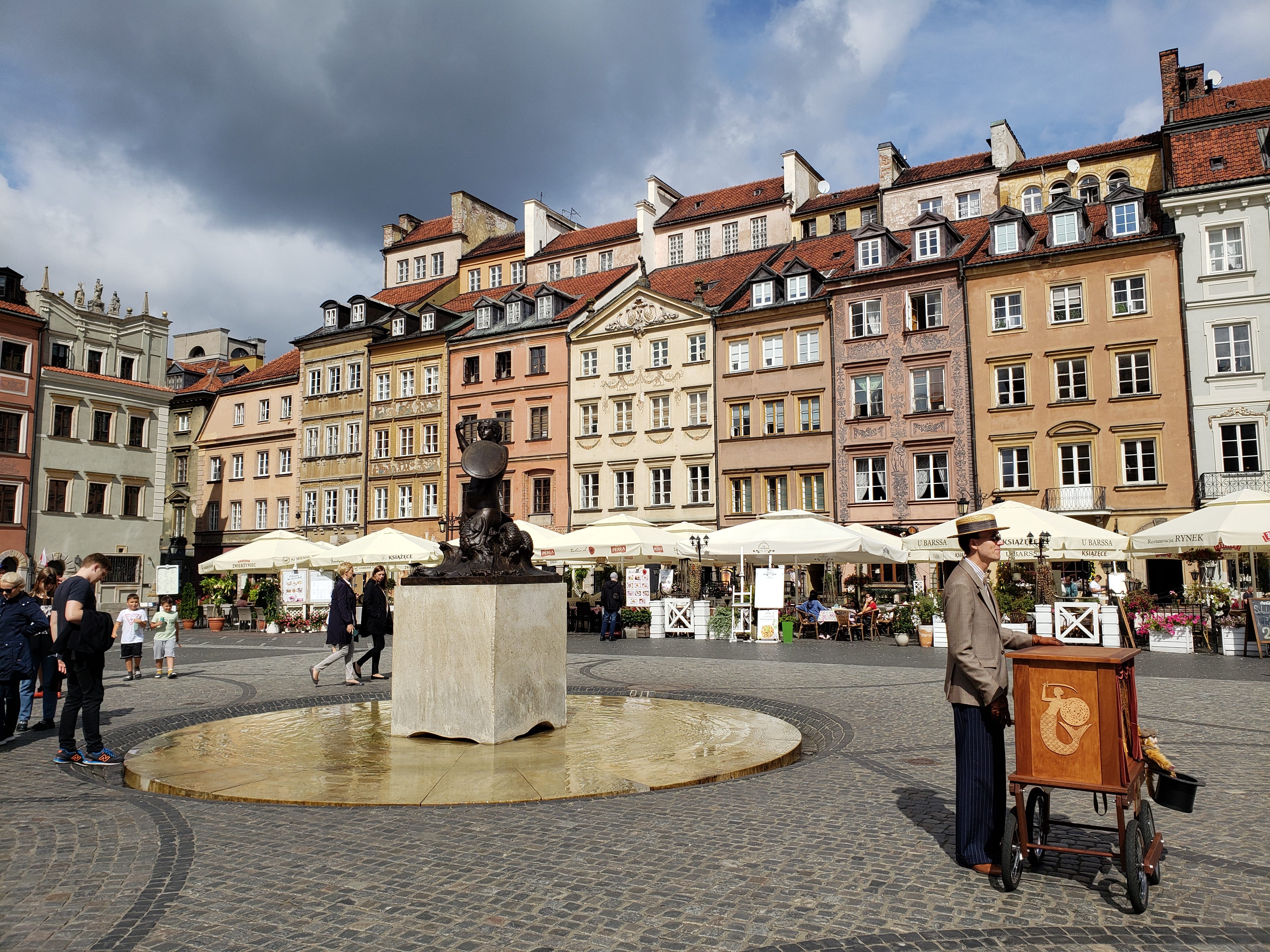
Next stop Vienna.
to be continued…